Camel Trekking near Taghazout
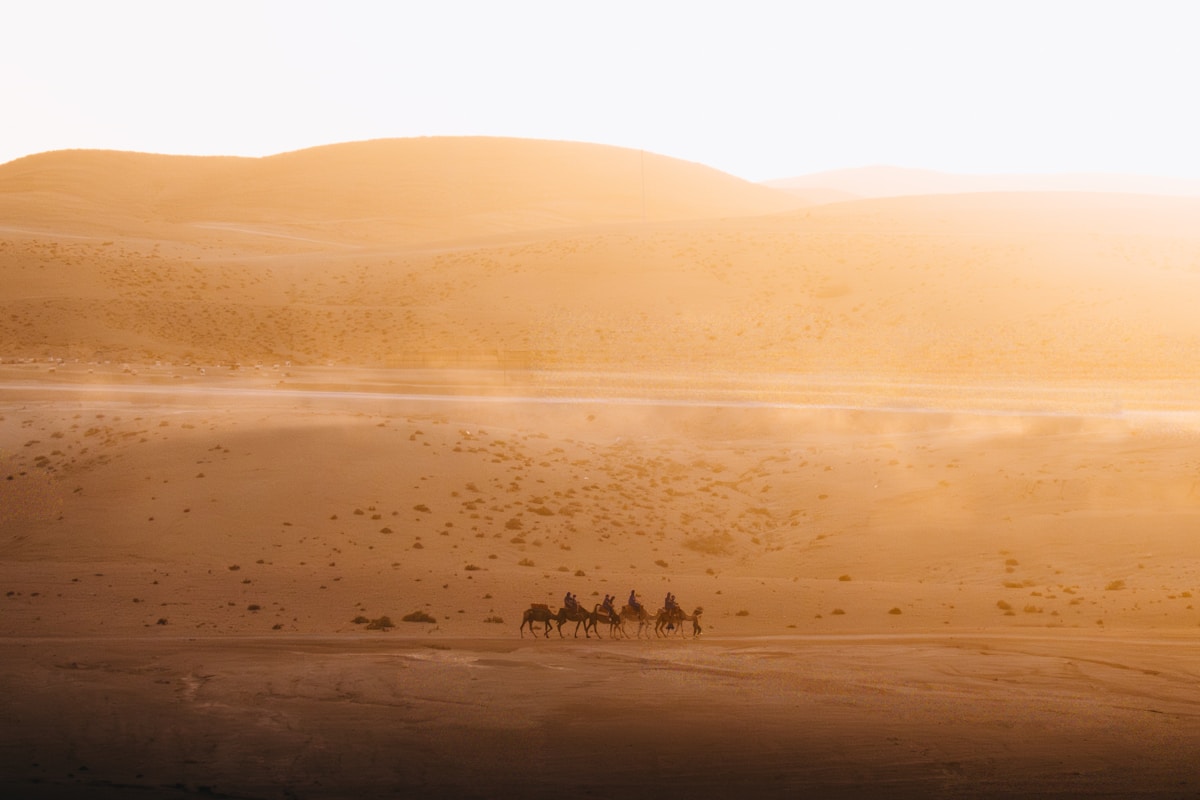
The dromedaries (single-humped camels) that inhabit the coastal and semi-desert regions around Taghazout and Agadir offer a distinctly Moroccan experience — riding one is not about Saharan romance but about moving through a landscape where these animals have worked for centuries. The difference between a commercialised tourist beach ride and a genuinely good trek is significant.
Where to Trek
Beach rides near Agadir are the most accessible option and the most tourist-oriented. These typically run along the wide crescent of Agadir’s beach, starting and finishing on the sand. They’re convenient if you’re day-tripping from Taghazout and have limited time, but the experience feels commodified — you’re one of many tourists in rotation, the animals can be worked hard in the midday heat, and the landscape, while beautiful, doesn’t offer much variation.
The better choice, if you have flexibility, is to look south towards Tifnit (about 40km south of Agadir) or further inland into the dune landscape. These treks take you into semi-desert terrain with genuinely wild feeling — fewer tourists, more time to understand how the camel moves and thinks, and operators who have deeper relationships with their animals.
Duration and Pricing
A short beach ride, typically 30 minutes, costs 400–600 MAD (around £30–45 or €35–50). These are negotiable, especially if you’re booking directly rather than through a tour operator, though this is where animal welfare can suffer — the cheapest operators often cut corners on rest and animal care.
Longer sunset or dune treks, typically 2–3 hours, run 700–1,200 MAD depending on the operator and inclusions (tea, snacks, guide quality). These treks often include time to watch the camel being prepared, a slower pace, and better animal management.
Book through established operators with reviews on GetYourGuide or Viator rather than through random touts on the beach. The reviews will tell you quickly whether an operator prioritises the animals’ welfare and gives you a genuine experience rather than a rushed rotation.
The Animals
All camels in this region are dromedaries — one hump, built for heat and long distances. They move with a rhythm that takes some getting used to; your first 10 minutes will feel awkward as your body acclimates to the motion. They’re not aggressive animals but they’re working creatures with their own temperament — the better guides will explain this and give you insight into reading the camel’s mood.
What to Bring and Wear
Wear long trousers, not shorts. Camel saddles chafe, and the friction will leave marks if your legs are exposed. Closed shoes are essential (you’ll sometimes need to walk leading the camel). Bring a wide-brimmed hat, sunscreen, and water. Sunglasses will help with the brightness reflected off sand and water.
Timing Matters
Morning treks, ideally starting before 8am, or sunset treks are vastly superior to midday rides. The midday heat exhausts the animals noticeably and the light is harsh. Morning treks have the bonus of cooler temperatures and fewer other tourists. Sunset treks offer light and landscape that photographs well and feel more purposeful — you’re riding towards something rather than just being shuttled around.
Animal Welfare Consideration
Tourism puts pressure on working animals. You have leverage as a customer. Don’t use operators where the camels look visibly thin, distressed, or where the animals are ridden back-to-back without rest periods. A good operator will tell you how many tours their camels do per day and will show clear signs that the animals are cared for — healthy weight, alert demeanor, access to water, reasonable rest.
Getting There
From Taghazout, arrange a trek through your accommodation or book via GetYourGuide. If organising independently, Agadir’s taxi rank is the starting point — grand taxis run regularly from Taghazout to Agadir (15–25 MAD, 30–45 minutes). From Agadir’s central bus station, operators near the beach can arrange same-day treks.
For treks further south (Tifnit area), you’ll need to arrange transport as part of the tour package or hire a private driver, which will cost more but gives you access to the better, less-touristed experiences.
FAQ
Can I ride a camel with no experience?
Yes. Dromedaries are used to tourists and the motion, while unusual, is quickly manageable. Children and older adults can ride without issue. Tell your operator if you have any mobility concerns and they’ll adjust the pace accordingly.
What’s the difference between a camel ride and a camel trek?
A ride is typically a short beach circuit with minimal instruction. A trek involves longer distances, more time spent with the animal, and usually includes cultural or landscape context. Treks feel less like an activity you’re passing through and more like an actual experience.
Are camel treks ethical?
It depends entirely on the operator. Ethical operators rest animals properly, keep groups small, avoid midday heat, and you can see the animals are well-fed and cared for. Unethical ones work the same animal repeatedly in harsh conditions. Your choice of operator matters significantly.
When is the best season?
October to April. Summer heat (June-August) is punishing for both tourists and animals. Spring (March-April) and autumn (September-October) are ideal — warm but not scorching.
What if I’m scared of heights or motion sickness?
The height is minimal compared to a horse, and the rocking motion is gentle rather than jarring. Most people adapt quickly. If you’re prone to motion sickness, sit further back on the saddle and keep your eyes on the horizon.
Last updated: April 2026
Related articles: Agadir day trip from Taghazout, Best time to visit Taghazout, Activities in Taghazout
See also
Book Activities in Taghazout
Find guided surf lessons, day trips to Paradise Valley, camel treks, and more — all bookable online before you arrive.
Browse activities on GetYourGuide →