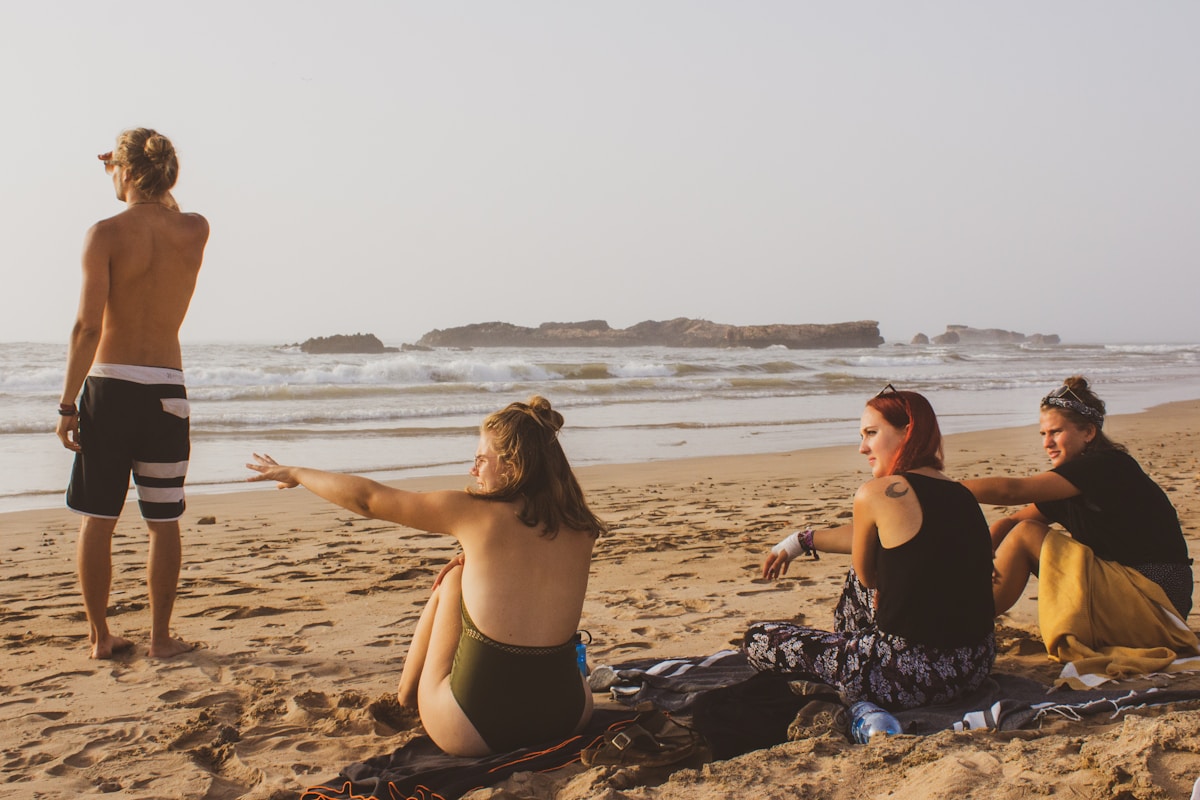
Taghazout is safe. That’s the short answer, and it’s accurate. It’s a small fishing village turned surf destination on Morocco’s Atlantic coast, not a sprawling city with urban crime patterns. Violent crime against tourists is rare enough to make regional news when it happens. Petty theft is occasional. The ocean is the biggest risk, and that’s a matter of competence rather than location.
We also recommend reading the official UK Foreign Office travel advice for Morocco before you go, as it is updated when conditions change.
What follows is an honest breakdown - not designed to alarm, but to give you the factual picture before you arrive.
Overall Crime Level: Low
By any reasonable measure, Taghazout has a low crime rate. The village is small - you can walk end to end in under ten minutes - and economically dependent on tourism. Serious crime against visitors damages livelihoods directly. Locals know who’s around and who isn’t.
Compare it to Morocco’s larger cities: Marrakech, Casablanca, and Fez all carry higher levels of petty crime, more aggressive touting, and more complex navigation for first-time visitors. Taghazout is markedly easier and lower-risk.
The main categories of risk are petty theft (occasional), hassle from touts (moderate but manageable), ocean hazards (the real risk), and the legal context around LGBTQ+ travel and personal conduct in a conservative Muslim country.
Petty Theft: Occasional, Not Rampant
Bag snatching and pickpocketing are the primary petty crime concerns. In Taghazout village specifically, theft is infrequent - the village is small and social consequences for locals are real. In Agadir city (a 30–45 minute grand taxi ride south), standard urban precautions apply.
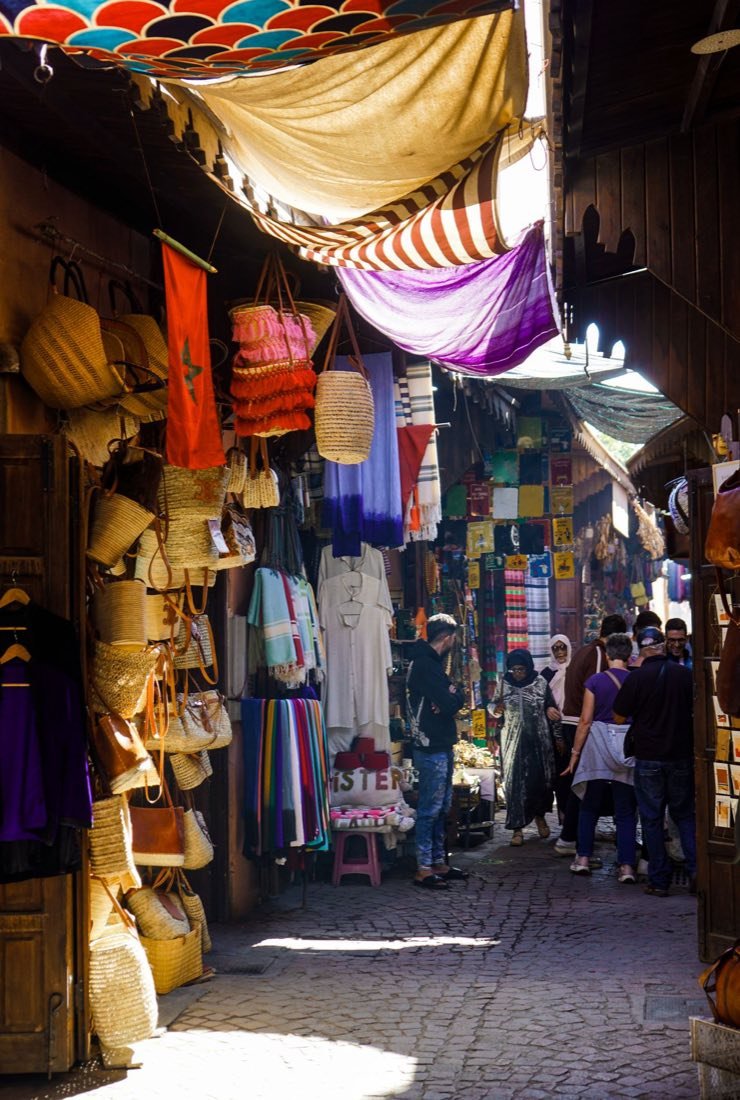 A covered souk alley hung with textiles and baskets.
What gets stolen: Phones left on café tables, bags unattended on beaches, valuables visible in parked cars.
Practical steps:
- Don’t leave your phone on the table when you step away.
- Don’t leave bags on the beach when you surf. Either bring a dry bag into the water, or go with someone who’ll stay on shore.
- Don’t leave anything visible in a rental car.
- Use a money belt or an inside pocket for cash and cards.
- Keep a photocopy of your passport separately from the original.
The likelihood of theft in Taghazout village is low. Most visitors who stay for a week or more report no problems at all.
Touts and Hassle: Manageable
The main square in Taghazout - the small open area near the pharmacy and main café strip - is where you’ll encounter the most persistent approaches from touts. They offer restaurant recommendations (with commission attached), transport to Agadir, guided tours, and other services. The approaches are rarely aggressive, but they can be persistent.
How touts operate:
- “Official guide” offers - not always official. If you want a guide, book through your accommodation.
- Overpriced taxi fares. Always agree on a price before getting in. Grand taxis between Taghazout and Tamraght have fixed shared rates around 5–10 MAD per person.
- Restaurant “recommendations” that lead you to a place where the guide earns a cut.
How to handle it: Be direct and not unfriendly. A clear “no thank you” works. If you engage with questions, the conversation extends. Touts move to easier targets. Walking with purpose and not making sustained eye contact reduces approaches significantly.
Safe for Solo Women?
Many solo women travel to Taghazout, particularly within the surf community, and the experience is manageable - but context matters.
Morocco is a conservative Muslim country. Street comments from men directed at women travelling alone are not unusual, particularly away from the beach areas. In Taghazout specifically, the international surf community creates a more tolerant and mixed-gender atmosphere than you’d find in smaller, more traditional inland towns. That mitigates but doesn’t eliminate the issue.
Practical guidance:
- Dress conservatively when walking through the village - cover shoulders and knees away from the beach. Beachwear is fine at the beach.
- Walking back from restaurants in the village at night is fine. Taghazout is small, lit on its main streets, and compact.
- Rooftop terraces and riads are comfortable and safe spaces.
- If staying somewhere isolated from the main village, take a grand taxi rather than walking alone after dark.
- A wedding ring (real or otherwise) reduces unwanted approaches.
Solo women who’ve spent time in Taghazout consistently report it as more manageable than Marrakech or Fez. It’s not zero-hassle, but it’s far from the most difficult travel environment in Morocco. For a full breakdown of solo travel logistics, meeting other travellers, and safety for solo women, see our Morocco solo travel guide.
Safe for LGBTQ+ Travellers?
This requires a direct answer. Same-sex acts are illegal in Morocco under Article 489 of the Penal Code, carrying penalties of up to three years in prison. This is the legal reality, regardless of how progressive the surf community atmosphere might feel.
In practice, enforcement targets public behaviour rather than private conduct in accommodation. Taghazout’s international tourism environment is more tolerant than rural Morocco, but it is not a liberal environment in the European or North American sense.
Search hotels in Taghazout on Booking.com
Practical guidance: Be discreet. Same-sex couples travelling together are not at routine risk, but public displays of affection that would be unremarkable in Spain or the UK will attract attention, and potentially hostile attention, in Morocco. Use the same level of discretion you would in any conservative country.
Swimming and Ocean Safety
This is the genuine major risk in Taghazout - not crime. The Atlantic at the surf breaks has real hazards:
Rip currents: Present on several beaches, including near Banana Beach. If caught in a rip current, don’t fight it directly - swim parallel to shore until clear of the current, then return to the beach. Never enter the ocean alone if you’re not a strong swimmer.
Reef breaks: Anchor Point, Hash Point, Boilers, and other reef breaks have sharp rocky seabeds. Reef cuts are painful, can be deep, and are prone to infection in warm seawater. Wear reef booties at reef breaks. Carry antiseptic.
Wave power: Winter swells (November–March) can be powerful. If you’re not an experienced surfer, this is not the time to paddle out at Anchor Point on a two-metre swell. Respect your ability level. Lessons from qualified instructors are available and genuinely worth taking.
Non-swimmers: Agadir’s beach, 25km south, has calmer, sheltered water with lifeguards in season. Taghazout’s surf beaches are not appropriate for non-swimmers without supervision.
Traffic
Taghazout village itself has no significant traffic problem - the main alleyways in the village core are too narrow for cars. The coastal road that runs through Tamraght and past Taghazout carries normal Moroccan traffic. Exercise the usual caution crossing roads; Moroccan drivers follow different conventions to northern European traffic norms.
Beach Safety
Don’t leave valuables on the beach when you surf. This applies everywhere, not just Morocco. Either secure items in a waterproof bag and take them with you, or travel with someone who stays on the beach. Theft from unattended towels is not rampant, but it happens.
Water and Food Safety
Drinking water: Tap water in Taghazout is technically treated but not reliably safe to drink directly. Use bottled water for drinking. Established restaurants cook with local water without problems for most visitors, but if you have a sensitive stomach, stick to cooked food for the first few days.
Food hygiene: The established restaurants and riads in Taghazout and Tamraght are generally fine. Street food from the Aourir Wednesday market (flatbreads, olives, produce) is also fine - it’s not the kind of street food that represents a risk. Be more cautious at very cheap, high-turnover stalls in summer heat.
Shellfish: Avoid in summer months (June–August) when water temperatures are higher. Fresh fish from restaurants with quick turnover is fine year-round.
Ramadan Considerations
If you’re visiting during Ramadan (dates shift annually - check in advance), some practical things change:
- Many local cafes and restaurants are closed during daylight hours, or operate on reduced menus.
- Eating, drinking, or smoking in public during daylight hours is considered disrespectful and in some contexts technically illegal. Do it inside or away from public areas.
- Surf camps and tourist-facing restaurants generally continue operating normally.
- After sunset (iftar), restaurants are busy and the atmosphere in local cafes is lively.
- It’s a genuinely interesting time to visit if you’re interested in Moroccan culture, but requires some planning for food logistics.
Emergency Contacts
- Police: 19
- Ambulance: 15
- Taghazout has a basic clinic for minor injuries. Serious injuries are treated in Agadir (30–45 minutes south).
The Honest Summary
Taghazout is one of the easier and safer destinations on the Moroccan Atlantic coast. The surf community creates an international, relatively relaxed environment. Crime against tourists is rare. The ocean is the biggest hazard, and managing that is a question of self-awareness about your swimming and surfing ability.
Standard travel practices apply: secure your valuables, don’t leave things unattended, agree prices before transacting, dress conservatively off the beach, and know where you’re swimming before you get in the water. Travel insurance that covers surf activities is worth having - VisitorsCoverage travel insurance covers surfing, ocean activities, and emergency medical treatment from Agadir hospitals.
Packing list for Taghazout Best time to visit Taghazout Travel insurance for surfing