Crocro: A Local Favourite on the Taghazout Coast
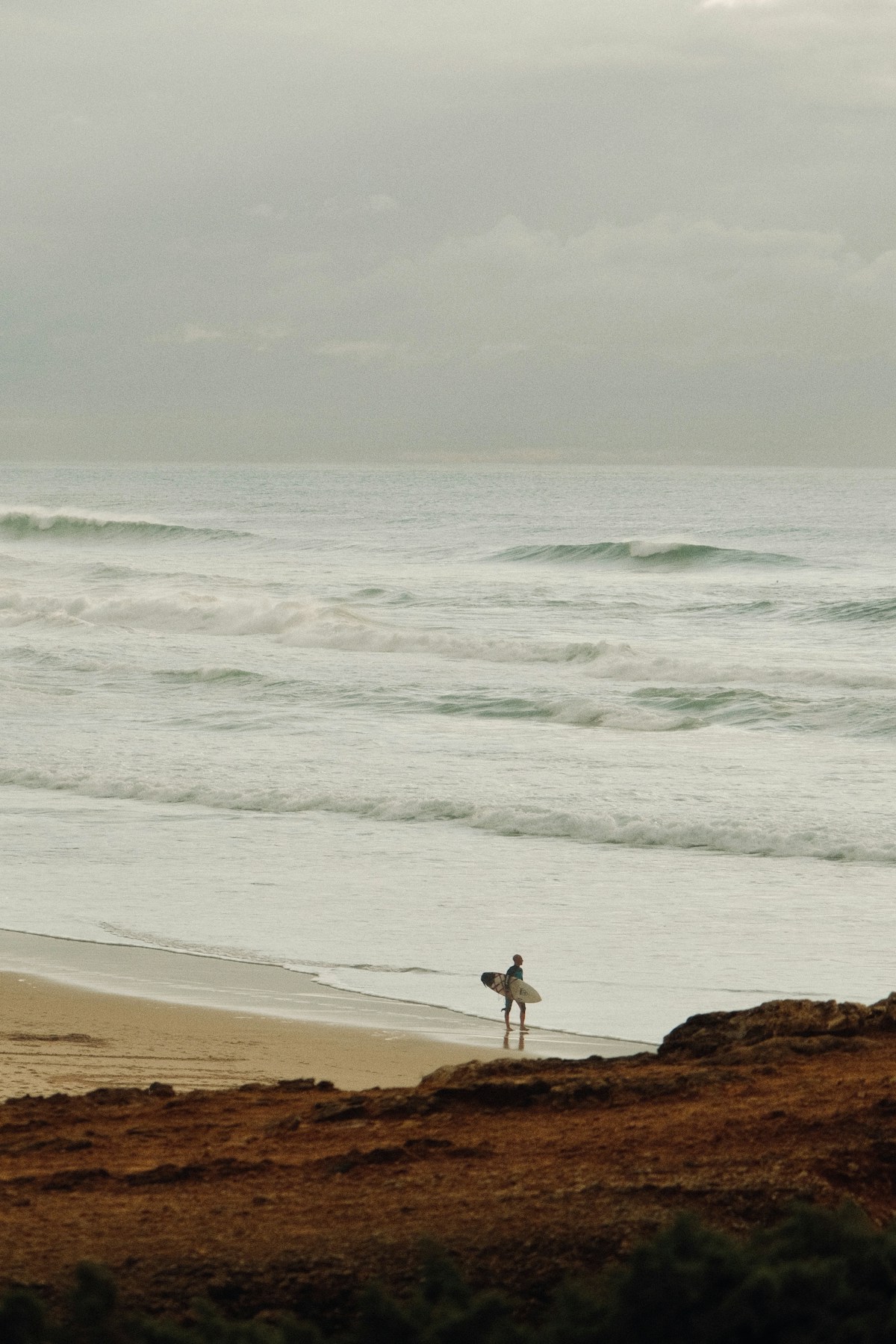
Crocro is one of those spots you hear about after you’ve been in the area for a while — mentioned in passing by a surfer who’s been coming here for years, or pointed out by a local guide who’s tired of watching visitors pile into Hash Point without knowing what else exists within a few kilometres. It’s not on the tourist circuit, which is largely the point.
Location
Crocro (also known as Crocodile Beach) is located approximately 14 km north of Agadir and 2 km south of Taghazout village, in the Tamraght bay area. The break sits roughly 300 metres north of Devil’s Rock. The name comes from the shape of the northern headland, which resembles a giant crocodile lying down — once pointed out, you won’t miss it.
The Wave
Crocro is a beach break with a sandy bottom that produces A-frame peaks — both lefts and rights depending on the sandbank formation and swell angle. It is well exposed to NW and W swells, which means there is generally a wave here most days throughout winter. On a typical session, expect chest-to-head-high waves with a mix of clean walls and closeouts.
The sandy bottom and consistent conditions are what make CroCro one of the most popular surf spots in the Tamraght area for surf schools and camps. It’s more forgiving than the reef breaks further north, and the paddle-out is straightforward from the beach.
Best Conditions
Swell: Northwest, 2–4ft optimal. Crocro is often one of the first breaks on the coast to show shape when a new swell arrives, making it a useful early indicator. If Crocro is working, the bigger breaks further north (Hash Point, Anchor Point) will likely be firing too.
Wind: Offshore NE wind — same macro conditions as the wider Taghazout bay. Morning sessions before 10:00 are significantly cleaner, as the afternoon onshore breeze typically develops by midday.
Tide: Works best from mid to high tide. The beach break character means it is less tide-sensitive than the reef breaks, but shape tends to improve on a rising tide.
Best months: Works year-round, which is unusual for this coast. Winter (November–March) brings larger swells suited to intermediate and advanced surfers. Spring and autumn offer cleaner, smaller conditions that are more approachable. Summer swells are rare but when they arrive, Crocro can still produce surfable waves.
Skill Level
All levels. The sandy bottom and consistent conditions make CroCro suitable for beginners learning to surf, while the bigger winter swells provide enough push for intermediates and advanced surfers. Several surf camps in Tamraght use CroCro as their primary teaching beach. In summer, the smaller waves are ideal for first-timers.
Board Selection
Beginners will do well on a foam longboard or softboard. Intermediate surfers can ride a fish, mid-length, or standard shortboard (5’10”–6’4”). The wave has enough face to generate speed on a range of boards. Longboards work well here on smaller days — the mellow take-off and sandy bottom make it more longboard-friendly than the reef breaks further north.
Getting There
From Taghazout: 2 km drive south on the N1 coast road, or a 25–30 minute walk along the coast path. The spot is visible from the road — look for the crocodile-shaped northern headland.
From Tamraght: Walkable along the beach or coast path in 10–15 minutes heading north.
From Agadir: Grand taxi heading north on the N1, approximately 15–20 MAD per person as of 2026. Ask for the Tamraght area or Devil’s Rock — the driver will know the stretch. Pre-booked airport transfers to Taghazout are the easier option if you’re arriving with boards.
Parking is informal roadside along the N1. Free and generally safe during daylight hours.
Surf Camps and Lessons Nearby
Several surf camps in the Tamraght area run lessons at CroCro — it’s one of the primary teaching beaches in the area. Surf Berbere (Tamraght, approximately 350–450 MAD for a 2-hour group lesson as of 2026) and other schools use CroCro regularly. If you want to book surf lessons in Taghazout from an established operator, most will bring you here on beginner and intermediate days. Tamraght-based camps like Adventurer Surf Hostel and Amayour Surf Hostel (dorm beds from approximately 100–150 MAD per night as of 2026) position you within walking distance.
Practical Info
- Sandy bottom — significantly more forgiving than the reef breaks. Reef booties are not essential but some surfers wear them for comfort. Surfboard rental is available nearby if you haven’t brought your own.
- The crocodile-shaped headland that gives the spot its name is the northern rock formation. It’s a useful landmark for orientation in the water.
- No formal beach facilities — no toilets, no showers, no lifeguard. Bring water.
- Nearest refreshments: The cafes and restaurants in Tamraght village are a 10-minute walk south. Café Tamraght on the main road serves coffee and breakfast items from approximately 20–30 MAD as of 2026.
- Respect the locals. Crocro is primarily a local surf spot. Keep your group small, wait your turn in the lineup, and don’t paddle straight to the peak on arrival. Earning your waves here earns you respect.
FAQ
How do I find out about local spots like Crocro?
The best way is to spend time in the area — a week or two — and talk to surfers at Hash Point or in the cafes. Surf instructors who’ve been based in Taghazout for years will point you in the right direction if you ask. Alternatively, our surf spots comparison guide covers every break in the area.
Is CroCro better than Hash Point?
They’re different waves. Hash Point is a right-hand point break with longer rides and more shape. CroCro is a beach break with A-frame peaks — both lefts and rights. Hash Point has more quality when conditions align; CroCro is more forgiving and typically less crowded. For beginners, CroCro’s sandy bottom is a safer option.
Is CroCro the same as Devil’s Rock?
No — they’re separate breaks in the same area. Devil’s Rock is the beach break directly in front of Tamraght village, named after the headland rock formation at the south end. CroCro (Crocodile Beach) is roughly 300 metres north, named after the crocodile-shaped northern headland. Both are sandy-bottom beach breaks suitable for beginners.
Last updated: June 2026
Surfboard rental in Taghazout Compare all surf spots near Taghazout Devil’s Rock — the adjacent Tamraght break Tamraght town guide
Frequently Asked Questions
- What is CroCro surf spot?
- CroCro (also called Crocodile Beach) is a beach break in the Tamraght area, south of Taghazout village. Named after the crocodile-shaped northern headland, it produces A-frame peaks with lefts and rights over a sandy bottom. Suitable for beginners through to advanced surfers.
- Is CroCro good for beginner surfers?
- Yes — CroCro is one of the best beginner spots in the area. The sandy bottom is forgiving, waves are consistent, and several surf schools run lessons here. In winter it can get bigger and suit intermediates, but it is a reliable learning spot year-round.
- When does CroCro work?
- CroCro is well exposed to NW and W swells and picks up swell most days in winter. It is often one of the first spots to show shape when swell arrives. Summer brings smaller, gentler waves ideal for beginners.
Book Activities in Taghazout
Find guided surf lessons, day trips to Paradise Valley, camel treks, and more: all bookable online before you arrive.
Browse activities on GetYourGuide →Best price guaranteed: same price as booking direct. We earn a small commission at no extra cost to you.