Essaouira: Morocco's Windswept Atlantic City
Upcoming Events in Essaouira
- Gnaoua and World Music Festival
The 27th edition of Morocco's premier Gnaoua music festival in Essaouira, featuring over 400 artists and 42 maalems across Place Moulay Hassan, the beach, and medina venues.
Essaouira is the day trip you take when you want to remember that Morocco is more than surf camps and mint tea. It’s a UNESCO-listed walled medina on a dramatic Atlantic headland, with a working fishing port, Gnawa music drifting out of doorways, blue and white walls taking the full force of the ocean wind, and a creative, artistic character that sets it apart from anything on the Agadir coast.
It’s 170 kilometres north of Taghazout — about 2.5 to 3 hours by road. We’ve done it as a day trip from Taghazout and as an overnight stay. Both work. As a day trip it’s intense; as two days it’s perfect.
What Essaouira Is Like
Essaouira was built as a fortified trading port in the 18th century and looks it — thick ramparts on three sides, ocean on the fourth, the whole thing designed to withstand both Atlantic storms and naval attacks. The Portuguese built an earlier version of the fortifications; the current layout was commissioned by Sultan Mohammed III and designed, partly, by a French architect, which gives the medina an unusual Franco-Moorish character.
Inside the walls, a grid of narrow streets houses artisan workshops, galleries, music venues, fish restaurants and carpet sellers in roughly equal measure. The Gnawa music tradition is particularly strong here — you’ll hear the low, hypnotic rhythms from cafes and street corners throughout the medina.
The wind is significant and genuinely constant. Essaouira is one of the best kitesurfing and windsurfing destinations in the world for this reason. It also means the beach — long and impressive — is rarely calm enough for comfortable swimming.
What to See and Do
The medina and ramparts: Walk the sea-facing walls for the best views of the Atlantic and the fishing fleet in the harbour below. The ramparts are free to walk and take about 30 minutes.
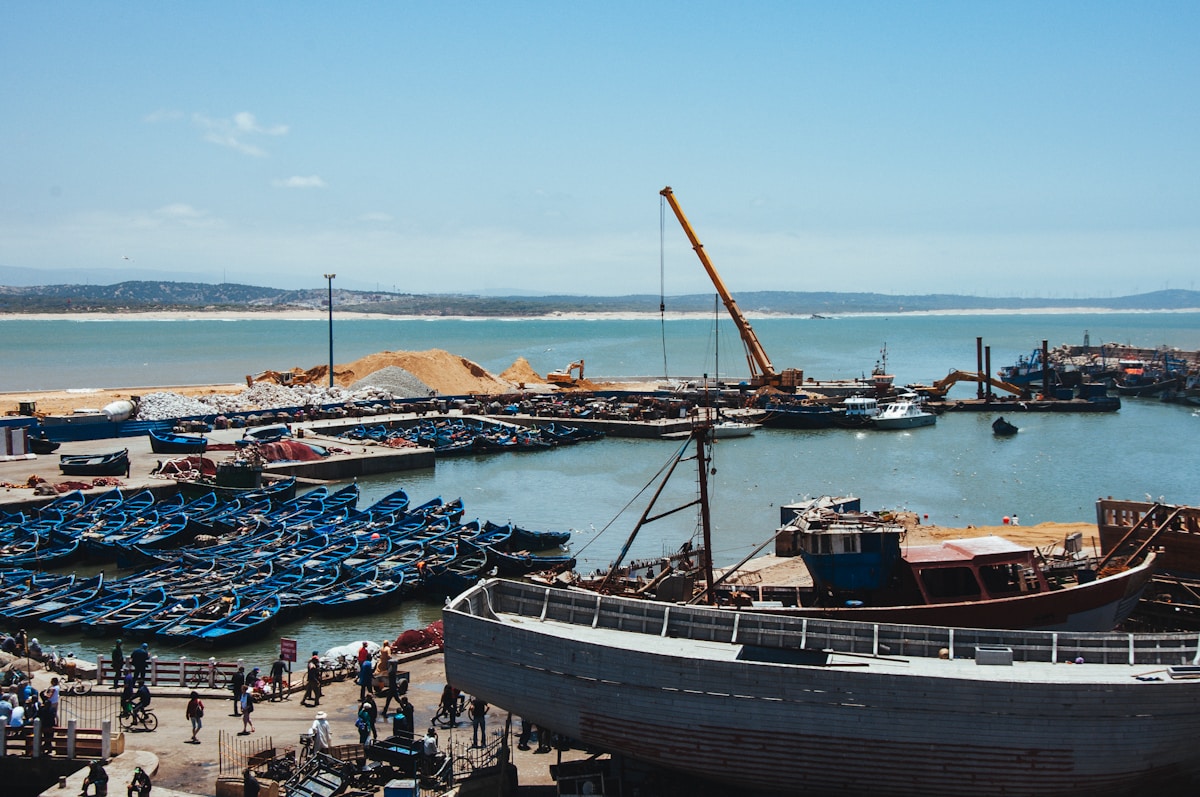
The fishing port: Active and photogenic. The blue boats, the seagulls, the fish auction in the morning — it’s genuinely worth arriving early enough to see it in action.
The souks: More artisan-focused than Marrakech and considerably less aggressive in terms of hassle. Woodwork (Essaouira is famous for thuya wood inlay), jewellery, textiles, and the inevitable Moroccan lanterns.
Gnawa music: Catch live music in the medina or ask your riad for recommendations. The Gnawa World Music Festival (typically June) draws large crowds.
The beach: A long arc of sand south of the medina, backed by dunes. Good for walking. The wind makes sunbathing challenging but kitesurfing schools operate here year-round.
Where to Eat
Essaouira’s seafood is excellent — the fish is pulled from the harbour the same morning. The row of grills just outside the medina’s main entrance serves fresh fish, prawns, and calamari, priced by weight. Point at what you want, negotiate the price, and eat at the adjacent plastic tables. Busy, chaotic, cheap, and very good.
For a sit-down meal, the restaurants within the medina range from backpacker-budget to mid-range European pricing. La Table by Madada — top of the range for fine dining and seafood, best for a special occasion. Triskala — the budget-conscious pick inside the medina, healthy Moroccan dishes, menu changes daily based on the fresh catch. Restaurant Blue Mogador — traditional Moroccan cuisine in a charming medina square. For the most authentic fish experience: buy directly from the fishmongers at the port and have it cooked at a nearby cafe — a classic Essaouira experience.
Getting from Taghazout to Essaouira
- Hire car: 2.5–3 hours on the N1. The most flexible option — park outside the medina walls and walk in.
- Souk to Surf shuttle: The easiest non-car option — direct Taghazout–Essaouira service for €18 (~3.5 hours). No confirmed direct CTM/Supratours Agadir–Essaouira service.
- Organised day trip: Various operators in Taghazout run minibus day trips. Convenient but less flexible — usually 6–7 hours in Essaouira. Current pricing: 300–500 MAD per person.
See the full Essaouira day trip guide for detailed logistics.
Practical Info
- Distance from Taghazout: ~170km, 2.5–3 hours by road
- Best time to visit: Year-round, but April–May and September–October have the most reliable weather without peak summer crowds
- Wind: Expect it. Bring a layer.
- Currency and ATMs: Good ATM coverage in and around the medina
FAQ
Is Essaouira worth visiting from Taghazout?
Yes — it’s the best day trip from the area and offers a genuinely different Moroccan experience. The medina, the port, and the food alone justify the journey.
Can I do Essaouira as a day trip from Taghazout?
Yes, but it’s long — you’ll want to leave early (7–8am) to make the most of it and return by early evening. An overnight stay is more relaxed.
How does Essaouira compare to Marrakech?
Smaller, more relaxed, far less intense in terms of hassle, and with a very different Atlantic feel. If the thought of Marrakech’s medina is overwhelming, Essaouira is the more approachable alternative.
Last updated: March 2026
Day trip to Essaouira — how to do it from Taghazout Getting around the Taghazout area
See also
Staying in Taghazout?
Compare guesthouses, riads, and surf camps. Prices and availability vary — booking early gets you the better spots.