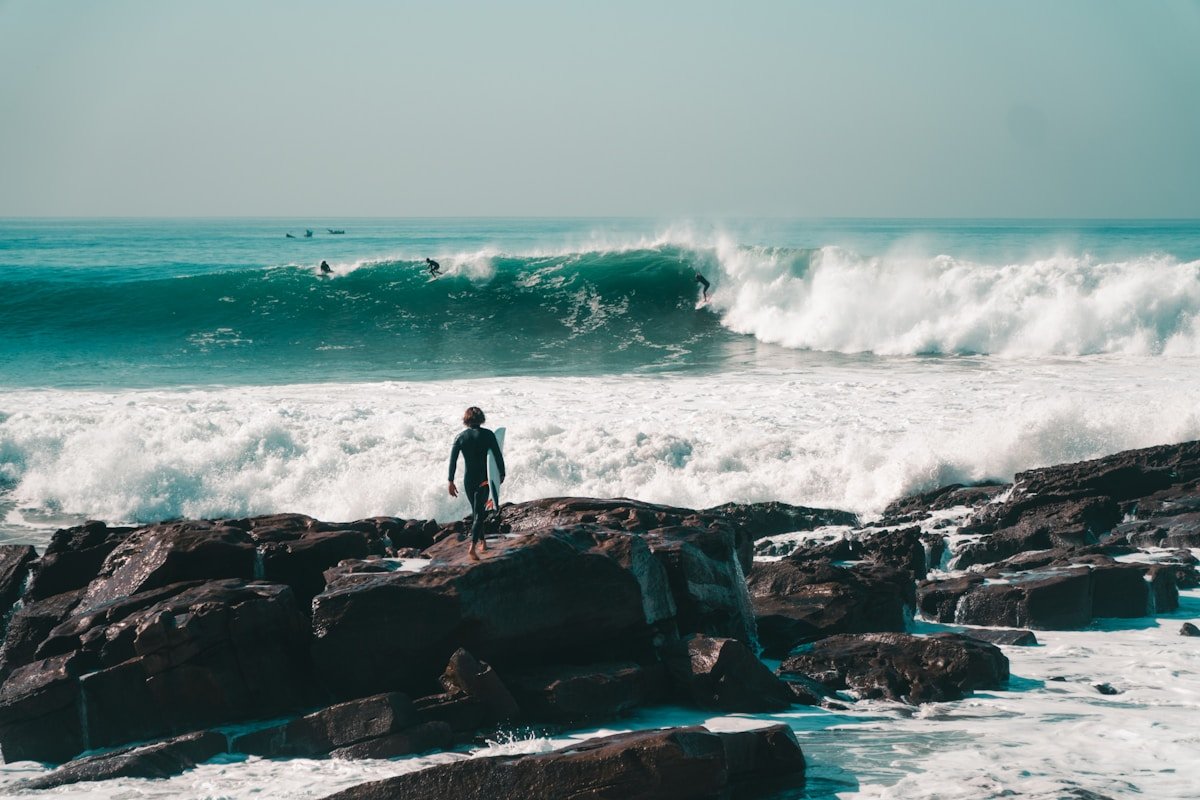
The surf along Morocco’s Atlantic coast is driven by North Atlantic swell, and the forecast parameters that matter here are different from those that matter at, say, a beach break in Cornwall. Taghazout’s point breaks are swell-direction sensitive. A swell that fires Anchor Point completely may leave Hash Point flat, or vice versa. Understanding how to read the forecast means understanding the mechanics of how each break works - not just looking at the height number.
The Apps and Sources to Use
Windguru is the most widely used forecast tool among surfers and instructors in Taghazout. It’s granular, updates frequently, and allows you to check specific sites. The free version is adequate for most purposes. Look for the Taghazout or Agadir station.
Surfline covers the main Moroccan surf spots and has a reasonable camera feed system, though camera coverage of Taghazout is patchy. Their swell reports and surf reports for Anchor Point give useful context if you want a narrative alongside the numbers.
Magic Seaweed (now part of Surfline) has a dedicated Taghazout page showing spot-specific forecasts. Good for a quick daily check.
Windy is useful for detailed wind forecasting, particularly when you want to visualise wind direction across the coast rather than just read numbers. During summer, thermal winds can affect conditions significantly and Windy’s visual map makes these patterns easier to read.
For on-the-ground confirmation, ask your surf school, hostel, or local instructor. Locals who surf these breaks daily have an accumulated knowledge of how specific forecast conditions translate into actual wave quality that no app can fully replicate.
What to Look For: The Key Parameters
Swell Height
Forecast swell height is measured at the open ocean, not at the break. At a point break like Anchor Point, wave faces will be notably larger than the forecast swell height suggests. A 1.5m forecast swell at Anchor Point can produce waves with 2–3m faces depending on swell period and direction.
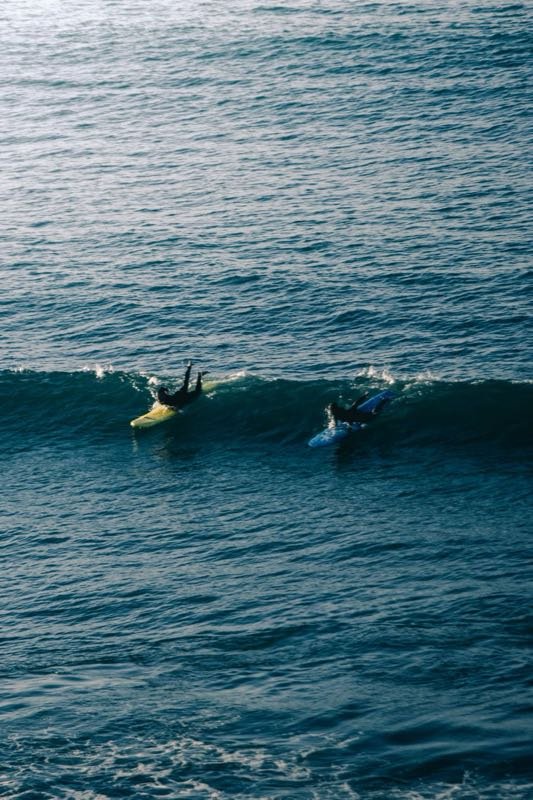 La plupart des sessions se jouent tôt le matin, avant que le vent ne se lève.
For reference:
- Under 1m: Suitable for beginners at beach breaks. Anchor Point and Hash Point likely too small or mushy for experienced surfers.
- 1–2m: The core of Taghazout’s best conditions. Anchor Point comes alive. Hash Point works well. Panoramas is manageable.
- 2–3m: Good for experienced surfers. Beginners should stay at beach breaks. Anchor Point can be excellent.
- 3m+: Expert conditions. Strong offshore winds essential. Not appropriate for anyone below an advanced level.
Swell Period
Period is the gap in seconds between successive waves. This matters as much as height.
A 2m swell with a 10-second period is moderately powerful - mushy at reef breaks, decent at beach breaks.
A 2m swell with a 16-second period is a completely different proposition. Long-period swells travel further (often from storms near Iceland or the Azores), arrive with more energy, and produce much more powerful, defined waves. Anchor Point’s long walling right-handers require this kind of long-period energy.
As a rough guide for Taghazout’s point breaks:
- 8–10 seconds: Adequate but not ideal. Waves lack definition.
- 12–14 seconds: Good. Proper surf at most breaks.
- 14–18 seconds: Excellent when height is in range. The breaks perform at their best.
- 18+ seconds: Powerful and demanding.
Swell Direction
This is where Taghazout gets specific.
North Atlantic swell (NW to NNW, typically 290–330°): This is the primary swell window for Anchor Point and most of Taghazout’s point breaks. NW swell wraps around the headlands and produces the long right-handers the area is known for.
West swell (240–280°): Works across more breaks. Panoramas and beach breaks can be good on westerly swell even when the point breaks are not perfectly lined up.
SW swell (200–240°): Less common during the main surf season. Can produce decent waves but the point breaks don’t receive it cleanly. More of a beach break swell direction.
The practical takeaway: if the forecast shows NW swell with a long period (14s+), expect Anchor Point and Hash Point to be working. If the swell is smaller and more westerly, the beach breaks at Panoramas and Tamraght will likely have cleaner conditions than the points.
Wind
Offshore (NE to ENE, blowing from land toward ocean): This is what you want. It holds the wave faces up, creates grooming on the surface, and generally improves quality across all breaks. In Taghazout, offshore winds typically occur in the morning before the sea breeze sets in.
Onshore (SW to W, blowing from ocean toward land): Closes out the wave faces. Bumpy surface. Generally makes surfing much harder. Afternoon sea breezes are onshore along this coast in summer.
Cross-shore: Variable effect depending on direction relative to the break. Check which way a specific break faces before deciding.
The practical pattern in Taghazout: morning sessions are almost always better than afternoon sessions in summer due to offshore morning conditions turning onshore by midday. In winter and spring, winds are less predictable and you need to check forecasts more carefully.
Tides
Anchor Point and Hash Point are both reef breaks. Tide height affects wave quality significantly:
- Low tide: The reef is shallower. Waves may hollow out but the wipeout consequences are more serious.
- Mid tide: Generally the optimal range for both breaks.
- High tide: Waves can become sluggish and lose their shape at some reef breaks.
Most surf apps include tide information. Check it alongside the swell and wind data.
Seasonal Patterns
November to March (peak surf season): The main Atlantic swell season. Regular long-period NW swells. Wind is variable and less reliably offshore. Water temperature 17–19°C - 3/2mm wetsuit minimum. This is when the experienced surfer crowd arrives. Travel insurance that covers surf sports is advisable - reef breaks carry real injury risk in powerful winter swell.
April to June: Transitional. Swell decreasing in size but still consistent. Morning winds more reliably offshore. Excellent for intermediate surfers. Water warming toward 20°C.
July to August: Smallest swell of the year. Consistent offshore morning winds. Best beginner conditions. The region receives regular summer swells from distant Southern Hemisphere storms (Southern Ocean swell). These travel long distances and arrive with long periods (often 14–16s), producing surprisingly good waves despite moderate heights. Water temperature peaks at 22–24°C.
September to October: Swell building again. Transitional winds. One of the best periods for intermediate to advanced surfers - manageable size with improving quality.
Reading the Specific Breaks
Anchor Point: Needs NW swell, 1m+, period 12s minimum. Works best on light offshore (NE). Fades in onshore wind. Long right-hand point break - the longer the period, the longer the ride. Check the tide: mid-tide optimal.
Hash Point: Similar to Anchor Point but more sheltered. Can work on slightly smaller, shorter-period swell. Often has a longer window of good conditions through the tide cycle.
Panoramas (Tamraght beach break): More forgiving of swell direction. Works on W to NW. Better for beginners in 0.5–1.5m range. Less affected by tide than reef breaks.
Mysteries: Picks up long-period NW swell well. Less affected by crowds than Anchor or Hash. Worth checking when the main breaks are busy.
Boilers: Sensitive to swell direction. Needs NW specifically. A shorter ride but more intense than Anchor Point at the same swell.
Imsouane (1.5hr north): The longest right-hander in Morocco. Picks up SW swell better than the Taghazout breaks, making it worth the trip on days when conditions at Taghazout are poor but a southwesterly swell is running.
Monthly Surf Conditions at a Glance
| Month | Avg Swell Height | Swell Period | Wind | Level | Notes |
|---|---|---|---|---|---|
| January | 1.5–3m | 14–18s | Variable | Intermediate–Advanced | Peak season. Cold water 17°C. Crowded. |
| February | 1.5–3m | 14–18s | Variable | Intermediate–Advanced | Best month overall. Big consistent swells. |
| March | 1–2.5m | 12–16s | Improving | Intermediate–Advanced | Season winding down but still excellent. |
| April | 0.5–1.5m | 12–14s | More offshore | Beginner–Intermediate | Shoulder season. Emptier lineups. Warm days. |
| May | 0.5–1.2m | 10–14s | Offshore mornings | Beginner–Intermediate | Pleasant conditions, reliable mornings. |
| June | 0.3–0.8m | 10–12s | Offshore mornings | Beginner | Small surf. Summer begins. Good for lessons. |
| July | 0.2–0.6m | 8–12s | Offshore mornings | Beginner | Flat most days. Water 22°C+. |
| August | 0.2–0.6m | 8–12s | Offshore mornings | Beginner | As July. Southern Hemisphere pulses occasional. |
| September | 0.5–1.2m | 10–14s | Variable | Beginner–Intermediate | Swell building. Uncrowded. Good value month. |
| October | 0.8–2m | 12–16s | Variable | Intermediate | Pre-season. Good waves, fewer crowds. |
| November | 1.5–3m | 14–18s | Variable | Intermediate–Advanced | Season starts properly. Surf camps filling up. |
| December | 1.5–3.5m | 14–18s | Variable | Intermediate–Advanced | Peak season. Book accommodation early. |
Heights indicate open-ocean swell. Wave faces at reef breaks (Anchor Point, Hash Point) will be notably larger.
Book Your Surf Camp Before You Arrive
Surf camps in Taghazout are not just for beginners - they are the most efficient way to surf here regardless of level. A camp gives you an instructor who reads the forecast, selects the right break for the day’s conditions, and puts you in the water at the right moment. This matters more in Taghazout than at most surf destinations because conditions change quickly and break selection is non-trivial.
For beginners (October–April): A structured camp is close to mandatory. Reef breaks are powerful and require experience. Beginners need to be at beach breaks - specifically Mysteries Beach or Agadir’s urban beach breaks - and a camp will ensure you are not accidentally paddling out at Anchor Point on a 2m+ day.
For intermediates (any time): A week-long camp in April–May or September–October hits the sweet spot: consistent swell at manageable size, offshore mornings, and emptier lineups than peak winter season. Intermediate surfers make the most progress in these shoulder windows.
For advanced surfers (November–March): You will likely surf independently, but a guided forecasting service or simply joining locals at the line-up is worth it. Anchor Point’s entry and exit over the reef is not obvious on your first visit.
Browse surf camps and packages in Taghazout via GetYourGuide, or for a direct lesson booking: surf lessons in Taghazout.
The Practical Routine
Before each session:
- Check Windguru or Surfline for swell height and period.
- Check swell direction - is it NW (points firing) or W/SW (beach breaks more reliable)?
- Check wind forecast - when does it turn onshore?
- Check tide - is there a mid-tide window when your chosen break works best?
- Get on the water before the wind turns.
Ask at your surf school or accommodation the evening before. Local knowledge about how specific breaks are behaving is often more accurate than any app for the 12 hours ahead. If you haven’t booked lessons yet, surf lessons in Taghazout include instructor-guided break selection - your instructor reads the forecast and takes you to the right spot for the day’s conditions.
Taghazout surf spots guide - Anchor Point, Hash Point and more Best time to visit Taghazout for surfing Taghazout swell seasons: full breakdown by month Surf schools in Taghazout Best surf instructors in Taghazout Learn to surf in Taghazout - beginner guide