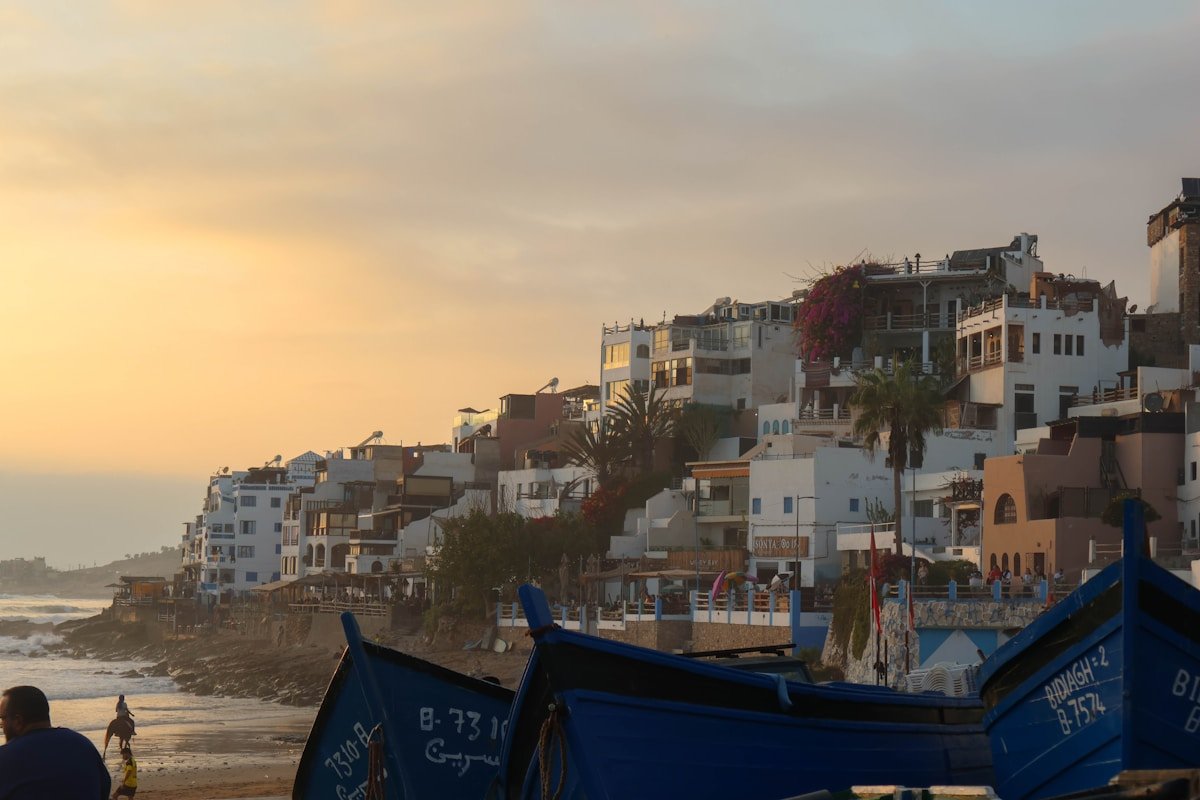
July in Taghazout is a straightforward proposition: no surf, warm beaches, full village. The Atlantic is flat - the storm systems that push swell south are in the Northern Hemisphere’s summer position, too far north to reach Morocco’s coast with any power. The village fills with a different crowd: Moroccan families on the coast for school holidays, European beachgoers, and a scattering of digital nomads who discovered that Taghazout’s beaches and cafes work just fine in summer. It’s a different experience to winter, not a worse one - just different.
Surf in July
Minimal. The North Atlantic is in its summer dormancy; Southern Hemisphere swells from Antarctic storms are too far away to reach the Moroccan coast with significant energy. What arrives is:
Swell: Average 0.5–1m, mostly wind-driven and inconsistent. Week-long flat spells are normal. The odd 1m day is surfable at Hash Point and Banana Point, but conditions are small and unreliable.
What works in July: Banana Point and the Tamraght beach breaks are the only realistic options - small, mellow, suitable for beginner lessons. Surf schools operate in July specifically for first-timers in these conditions. Imsouane, an hour north, handles small swell better than Taghazout’s main breaks.
For experienced surfers: July is genuinely not worth it. Even on the “best” July swell, Anchor Point and the north coast breaks barely come alive.
Water temperature: 21–22°C - the warmest of the year. Perfect for extended swimming without any wetsuit.
Weather in July
July is hot, sunny, and very dry. Daytime temperatures average 25–30°C on the coast. The Atlantic coastal breeze is essential - it keeps Taghazout 8–12°C cooler than inland Morocco and makes July heat manageable. Evenings are warm at 18–22°C.
The sky is consistently blue and clear. Rain is virtually unknown in July. Days are long (sunset around 9pm).
What to pack: Minimal. Swimwear, light cotton or linen clothes, strong SPF 50+ sunscreen - UV is intense even on a mild day. A light layer for the one or two times you’ll want it. No wetsuit.
Crowds
July is Taghazout’s busiest month alongside August. Moroccan school holidays mean Moroccan families flock to the coast - Taghazout and the beaches near Agadir are packed. The village is at its most crowded. Accommodation is more expensive than any other month and books up fast.
Search hotels in Taghazout on Booking.com
The social energy is different from winter surf season - louder, more family-oriented, more domestic visitors and fewer European surfers. The rooftop cafes are still the social hub, but the conversation is less about wave heights and more about everything else.
Activities in July
With the surf out of the equation, activities take centre stage:
Beaches: The main reason to be here in July. Taghazout and Tamraght beaches are clean and the water is warm enough for hours in the sea. The Agadir beach, 20 minutes south, is longer and has more facilities.
Paradise Valley: Go in the morning before it gets busy and hot. By 11am on a July day the valley can be packed and the pools crowded. An early start is essential.
Sandboarding at Timlalin: The sand dunes at Timlalin near Agadir are an interesting half-day alternative. Best in the morning.
Agadir: Worth visiting specifically for the marina, souk, Medina Polizzi (reconstruction of the historic city), and the wider beach promenade.
Day trip to Marrakech: July is actually a viable time to visit Marrakech if you front-load the sightseeing early morning (before 10am) and rest midday. The medina and souks are busy with summer tourists but fully operational.
Hammam: A July hammam in Taghazout or Aourir is a different experience to winter - the steam is less welcome in the heat, but the black soap scrub and massage are seasonless pleasures.
Who July Suits
Best for: Non-surfers on a beach holiday, families, and those combining Morocco coast with wider travel. Anyone whose schedule is fixed to summer.
Not ideal for: Experienced surfers. July will be a frustrating month for anyone whose primary goal is waves. If summer is your only option, consider combining Taghazout (beach days) with the Sahara or High Atlas for a varied trip.
July at a Glance
| Swell | Flat to minimal (0.5–1m) |
| Daytime temp | 25–30°C |
| Water temp | 21–22°C |
| Wetsuit | None needed |
| Crowds | Very high - peak summer |
| Accommodation | Peak rates, book well ahead |
Planning Tips
Book accommodation for July well in advance - it fills as quickly as February and March. If you’re set on July, the first week (before Moroccan school holidays fully begin) is slightly calmer. Consider combining five to six nights in Taghazout with a separate itinerary segment in Marrakech or the desert. Pre-booked airport transfers to Taghazout handle the arrival logistics, which is especially useful in busy July. Travel insurance for Morocco is worth having in place before you go.
Taghazout in August - more of the same Taghazout in June - the month before Taghazout in October - when surf returns Best time to visit Taghazout - full seasonal breakdown