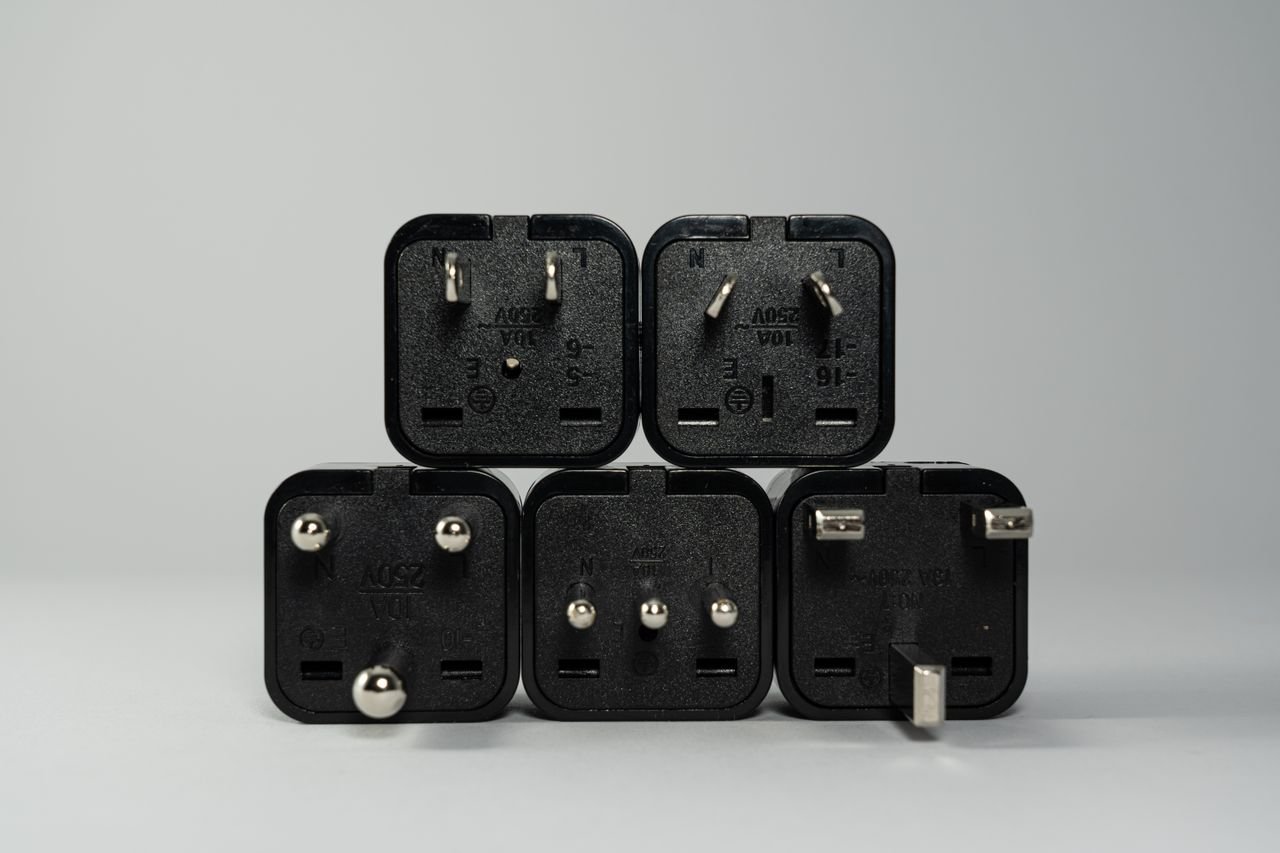
If you are packing for a surf trip, the plug question takes about two minutes to settle and saves a lot of frustration on day one. Morocco runs on the European system, and Taghazout is no different from Agadir or Marrakech. This page covers the sockets, the voltage, what to check on your own gear, and where to pick up an adapter if you forget. For the rest of the kit list, see our Taghazout packing list.
Plug types and voltage in Morocco
| Item | Morocco |
|---|---|
| Voltage | 220V |
| Frequency | 50Hz |
| Plug types | C and E |
| Pin shape | Two round pins, 4 to 4.8 mm |
Type C is the familiar two-round-pin plug used across continental Europe. Type E has the same two round pins, but the socket has a fixed earth pin, with a matching hole in the plug. In practice almost every socket you meet in Taghazout accepts a standard European two-pin plug, and the Europlug (Type C) fits both sockets.
Some older sockets in surf houses and budget rooms are slightly recessed, which stops plugs with wide moulded shoulders from seating fully. A slim two-pin plug or a short extension lead solves that.
Which travellers need what
- EU visitors (France, Spain, Germany, Netherlands and others): nothing. Your plugs fit and the voltage matches.
- UK visitors: you need a UK to EU adapter. UK Type G plugs are three rectangular pins and will not go in. The voltage is close enough (230V at 50Hz) that no converter is needed.
- US and Canadian visitors: you need both a plug adapter (Type A/B to Type C) and, for some devices, a voltage converter. Most modern electronics are dual voltage, but check first.
- Australian and New Zealand visitors: your Type I plugs do not fit. Bring an adapter. The voltage (230V) is compatible.
- South African visitors: older Type M and some Type D plugs do not fit; bring a Type C adapter. Voltage is compatible.
Check the charger label, not the plug
The voltage question matters far more than the shape. Look at the small print on each charger or power brick for a line such as “INPUT: 100-240V ~ 50/60Hz”. If it says that, the device handles Moroccan mains and only needs a plug adapter. This covers:
- Smartphones, tablets and e-readers
- Laptops and USB-C laptop chargers
- GoPro, drone and camera battery chargers
- Power banks and wireless earbuds cases
Items that often are not dual voltage, and are the usual casualties: hair straighteners, curling tongs, some hair dryers, electric shavers from the US, and small kitchen appliances. If the label shows only 120V, leave it at home or buy a 220V version locally.
 Cones of spices heaped in metal bins at the souk.
What to pack for a Taghazout trip
- One compact Type C adapter per person, or a single multi-plug travel adapter. A universal adapter with two USB ports lets a surf-camp room share one socket between two phones.
- A short extension lead with three or four European sockets. Surf camp and hostel rooms often have one socket for several people, and it is the item surfers most often wish they had packed.
- A power bank of 10,000 mAh or more. Long days at Anchor Point or Panorama beach, then the evening at a cafe, drain phones quickly. Our surf forecast guide is easier to check when your phone is alive.
- A USB-C charger with two ports to run a phone and a laptop from the same adapter.
- Spare camera batteries if you shoot surf sessions, charged before long taxi days.
Where to buy an adapter locally
If you arrive without one, the options are limited in Taghazout itself. Small shops along the main road sometimes stock basic chargers and cables, but adapters are hit and miss. Agadir is the reliable fallback: the Marjane hypermarket and electronics chains such as Electroplanet carry plugs, extension leads and USB chargers. Because the sockets here are European, a basic two-pin extension lead is cheap and easy to find, often in the range of 30 to 80 MAD depending on length and quality (approximate, as of 2026). Buy at the airport in your home country if you need a UK, US or Australian adapter, because those are harder to find in Morocco.
Power in coworking cafes, surf camps and rentals
Digital nomads should note that sockets are not equally available everywhere. The dedicated spots in our coworking cafes in Taghazout guide are set up for laptops, while ordinary beach cafes may only have a few outlets. Many surf camps provide a socket or two per room, rarely one per bed. If you are staying for a month or more, our coliving in Taghazout page covers setups where power and Wi-Fi are part of the deal. Pair this with a local data plan from our SIM cards and internet guide so you are not leaning on cafe Wi-Fi.
Power cuts and surge protection
Brief outages occur, usually for a few minutes and most often in winter storms. They are not a daily problem, but a power bank and charged devices before an evening out is sensible. Voltage can fluctuate on older wiring, so avoid leaving a laptop plugged in unattended in a cheap rental, and unplug expensive gear during thunderstorms.
Quick checklist
- Plug type: C or E, European two-pin
- Voltage: 220V, 50Hz
- UK, US, Australian visitors: pack an adapter
- US visitors: check for dual voltage before plugging in
- Skip single-voltage hair tools
- Bring an extension lead and a power bank
Everything else you need for the trip is in our first-time Taghazout guide.
Plan Your Trip
✈️ Book your flights to Taghazout 🛡️ Get travel insurance 📱 Stay connected with an eSIM 🚗 Rent a car