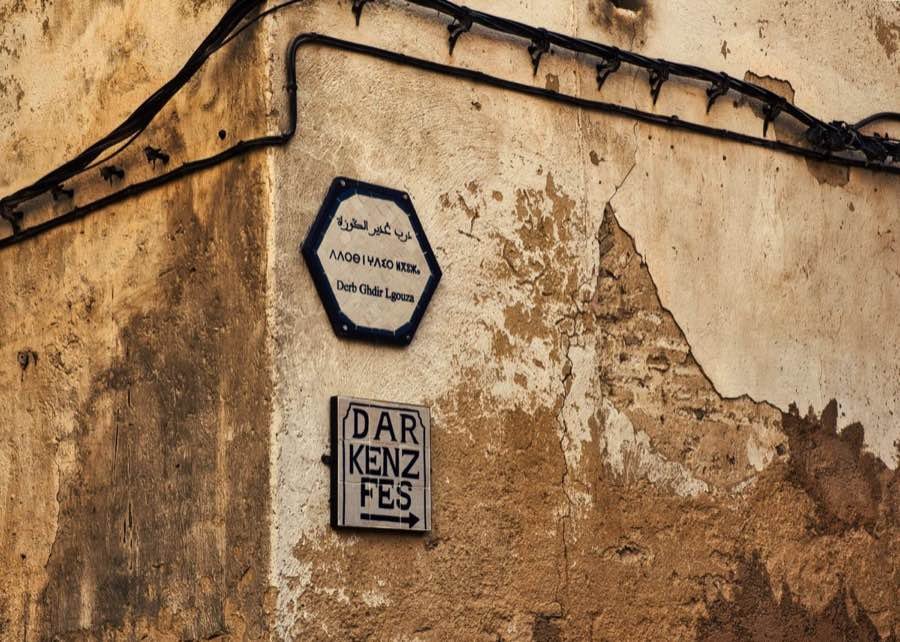
Taghazout sits in the Souss-Massa region, a historically Berber heartland, so the first language you will encounter is not Arabic - it is Tachelhit, the Tamazight (Amazigh/Berber) dialect of the Sous valley. On top of that, most Moroccans switch fluidly into Darija (Moroccan Arabic), French, and increasingly English. A handful of Taghazout surfers have even picked up Spanish or Portuguese from European visitors over the years.
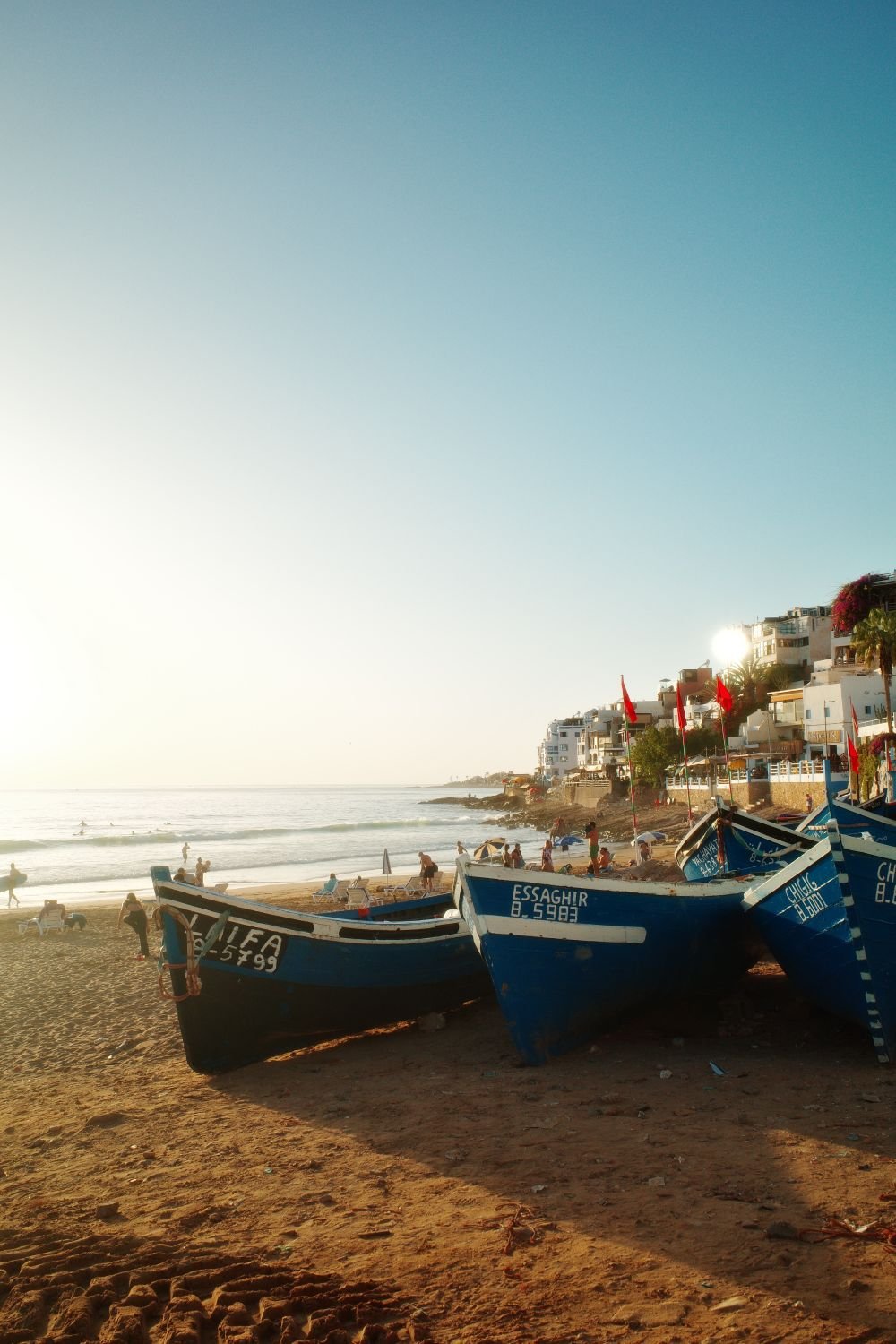 Blue boats on the sand in low sun with the hillside village beyond.
This guide gives you phonetic pronunciation for both Darija and Tachelhit where relevant, so you can move beyond tourist-speak and build a little goodwill in the lineup, the souk, and the café.
The Language Landscape
| Language | Where used |
|---|---|
| Tachelhit (Tamazight) | Home language for most Taghazout villagers; market stalls; between fishermen |
| Darija (Moroccan Arabic) | Wider Morocco; mixing with strangers; urban Agadir |
| French | Formal settings; older Moroccans; signage; menus |
| English | Surf schools; riads; restaurants; digital nomad spots |
| Modern Standard Arabic | Mosque; official documents; TV news - not conversational |
Most interactions as a visitor will use Darija or English. Tachelhit phrases score disproportionate warmth from locals - it signals genuine interest in the culture, not just the waves.
Pronunciation Key
Moroccan Arabic has sounds English-speakers find tricky. These phonetic guides are simplified but close enough to be understood.
| Symbol | Sound | Example |
|---|---|---|
| kh | Like “ch” in Scottish loch | khubz (bread) |
| gh | Like a French “r” - a voiced gargle | ghir (only/just) |
| r | Rolled, slightly guttural | rbia (spring) |
| q | Deep “k” from back of throat | qahwa (coffee) |
| aa | Long “a”, like “father” | saafi (great) |
| 3 | ”Ayn” - a constricted vowel from the throat; think of squeezing “a” | 3asl (honey) |
Greetings
Start here. Moroccans greet each other properly - a quick “hi” without eye contact reads as rude. The exchange often goes back and forth two or three times.
| English | Darija | Phonetic | Tachelhit |
|---|---|---|---|
| Hello / Peace be upon you | السلام عليكم | as-salaam 3alaykum | azul |
| Reply to greeting | وعليكم السلام | wa 3alaykum as-salaam | azul fell-wen |
| Good morning | صباح الخير | SbaH l-khayr | sbah l-khayr |
| Good evening | مسا الخير | msa l-khayr | ammas n-uḍan |
| How are you? | لاباس؟ | la baas? | manis tgit? |
| Fine, thanks (reply) | لاباس، الحمد لله | la baas, l-ḥamdullah | labaas, tamara |
| Welcome! | مرحبا | marḥba | ansuf d aksum |
| Goodbye | بسلامة | bis-slaama | akka d Rebbi |
Etiquette note: Greet shop owners before asking prices. Greet the whole room when entering a small café. Refusing to exchange pleasantries before business is considered abrupt and may get you a worse price.
Numbers
Numbers 1–10 in Darija. Critical for prices, wave counts, and bargaining.
| Number | Darija | Phonetic |
|---|---|---|
| 1 | واحد | waḥed |
| 2 | جوج | jooj |
| 3 | ثلاثة | tlata |
| 4 | ربعة | reb3a |
| 5 | خمسة | khamsa |
| 6 | ستة | setta |
| 7 | سبعة | seb3a |
| 8 | ثمنية | tmanya |
| 9 | تسعود | tes3ood |
| 10 | عشرة | 3ashra |
| 50 | خمسين | khamseen |
| 100 | مية | miya |
| 200 | جوج ميا | jooj miya |
At the Souk & Bargaining
| English | Darija | Phonetic |
|---|---|---|
| How much is this? | بشحال هاد الشي؟ | b-shḥaal haad sh-shi? |
| That’s too expensive | غالي بزاف | ghali bzzaaf |
| Can you lower the price? | تقدر تنقص شوية؟ | tqder tenqes shwiya? |
| I’ll take it | غانخده | ghankhdoo |
| I don’t want it | ما بغيتشي | mabghitshi |
| No thank you | لا، شكراً | laa, shukran |
| Where is…? | فين كاين…؟ | fin kayn…? |
| I’m just looking | كانشوف غير | kanshoof ghir |
Transport & Getting Around
| English | Darija | Phonetic |
|---|---|---|
| Where is the taxi? | فين كاين الطاكسي؟ | fin kayn t-taaksi? |
| Take me to Taghazout | ديني لتغزوت | dini le-Taghazout |
| Stop here, please | وقف هنا، عافاك | wqef hna, 3aafak |
| How much to Agadir? | بشحال لأكادير؟ | b-shḥaal le-Agadir? |
| Is this the right road? | هاد الطريق صحيح؟ | had t-triq SḥiH? |
| Right | اليمين | l-yimin |
| Left | اليسار | l-ysar |
| Straight on | نيشان | neeshan |
Grand taxis (shared long-distance) typically run between Taghazout and Agadir’s Inezgane terminal. Negotiate the fare before you get in; the going rate from Taghazout to Inezgane is around 15–20 MAD per seat.
Food & Café Ordering
| English | Darija | Phonetic |
|---|---|---|
| One coffee, please | واحد القهوة، عافاك | waḥed l-qahwa, 3aafak |
| Mint tea | أتاي | atay |
| Bread | خبز | khubz |
| Eggs | بيض | beed |
| Fish | حوت | ḥoot |
| Tagine | طاجين | tajin |
| Water | ما | maa |
| I don’t eat meat | ما كانكولش اللحم | makankulsh l-lḥem |
| Delicious! | بنين بزاف | bneen bzzaaf |
| The bill, please | الحساب، عافاك | l-ḥsaab, 3aafak |
Tip: Asking for atay (Moroccan mint tea) in Darija, even at a surf café, will almost always get you a smile and a slightly fuller glass.
Surfing & Beach
| English | Darija / Surf local | Phonetic |
|---|---|---|
| The surf is good | لمويج مزيانين | l-mwayej mzyaaneen |
| Big waves | لمويج كبار | l-mwayej kbaar |
| Good session! | جلسة مزيانة | jalsa mzyaana |
| Be careful | ردد راسك | redd raasek |
| I’m learning to surf | كانتعلم نركب لمويج | kantaallam nerkeb l-mwayej |
Emergencies
| English | Darija | Phonetic |
|---|---|---|
| Help! | عوني! | 3awni! |
| Call a doctor | عيط للطبيب | 3iyyet l-t-tebib |
| Call the police | عيط للبوليس | 3iyyet l-l-buliis |
| I am sick | أنا مريض | ana mrid |
| I am lost | أنا ضايع | ana daaye3 |
| Hospital | سبيطار | sbiitar |
| Police station | قسم البوليس | qsem l-buliis |
| Fire! | عافية! | 3aafiya! |
Emergency number in Morocco: 190 (police), 150 (ambulance and fire), 177 (Royal Gendarmerie, rural areas and roads).
Language Etiquette Tips
Use your right hand for greetings. Handshakes are common among men; follow the local lead with women - many prefer a hand to the chest and a nod rather than physical contact.
Learn one Tachelhit word. Azul (hello in Tamazight) is all you need. Saying it to a villager from Taghazout, Tamraght, or Aourir signals respect for their actual heritage - not just the tourist surface of Morocco.
Don’t open price negotiations immediately. The Arabic-speaking world values the social act of greeting. A la baas? before b-shḥaal? (how much?) signals you are a respectful visitor, not a transaction.
Switch to French if English hits a wall. In local grocery shops and non-tourist restaurants in Aourir or Tamraght, French is often more effective than English, particularly with anyone over 40.
Volume ≠ comprehension. If someone does not understand you, try a different word - not a louder repeat of the same one.
Is English Enough?
For the core surf trip - yes. Surf schools, most riads, and restaurants on the main strip in Taghazout and Tamraght operate in English. The GetYourGuide and Airbnb-age infrastructure that has grown around the area caters fluently to British, American, and Australian visitors.
Where it helps to know more: local taxis, the souk in Aourir on market day (Wednesday), buying fresh fish directly from the boats, or chatting with the fishing families who have lived in Taghazout village for generations. Those conversations - in however broken a Darija - are often the most memorable part of a trip.