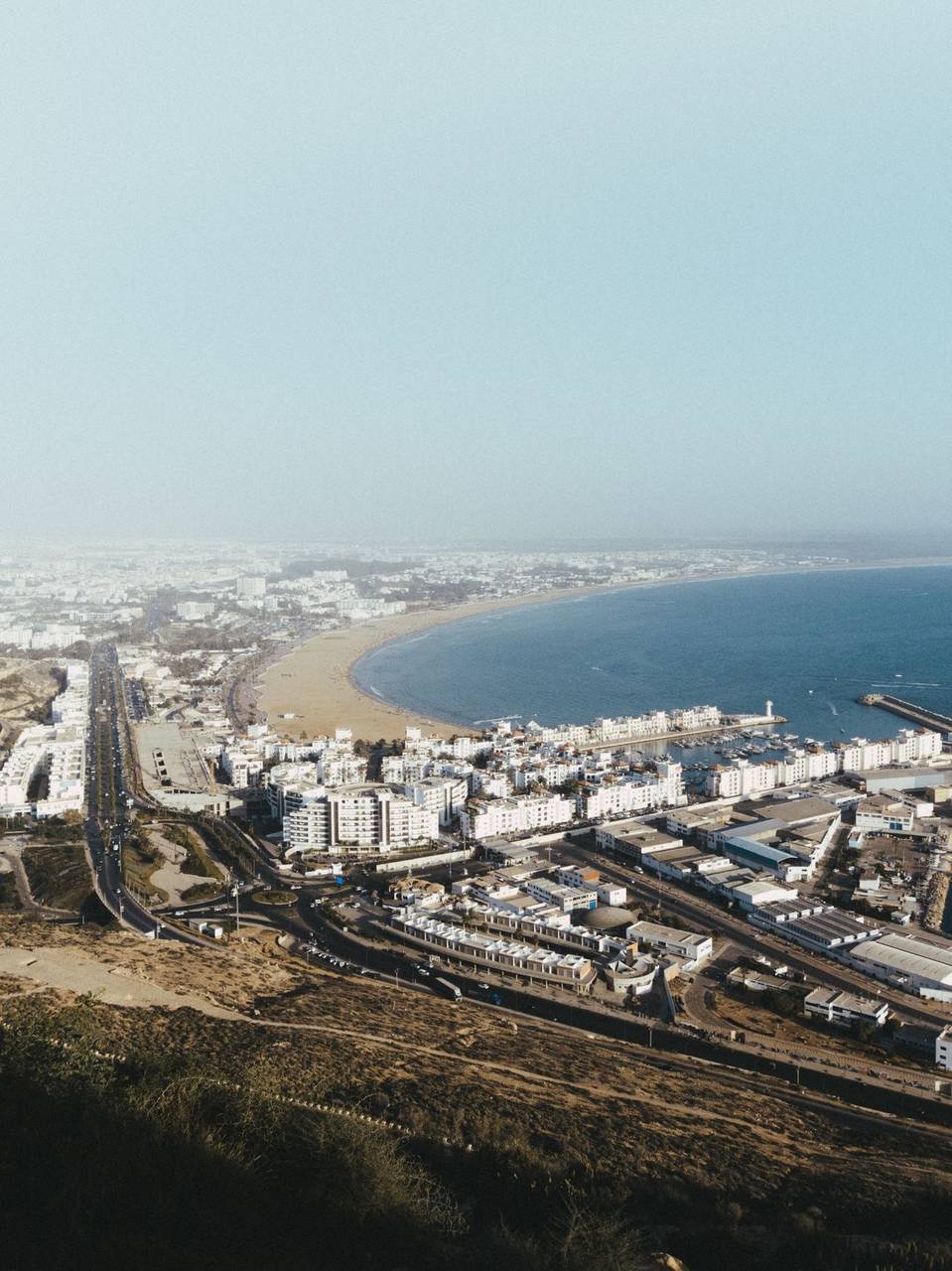
Taghazout is a small surf village, not a city, so help does not always arrive the way it does at home. Knowing which number to dial, where the nearest proper hospital is and who to ring afterwards makes a real difference. This page collects the numbers we could confirm, plus the practical judgement calls that matter more than any phone list. Numbers can change, so screenshot this page and check your own government’s travel advice before you fly.
Core emergency numbers
| Service | Number | Notes |
|---|---|---|
| Police (towns and cities) | 190 | Urban police, Sûreté Nationale. 19 from a landline |
| Royal Gendarmerie (villages, rural roads, highways) | 177 | Usually the right call for Taghazout and the coast road |
| Ambulance and fire (Protection Civile) | 150 | Same number for both services. 15 from a landline |
| Directory enquiries | 160 | Useful for finding a local number |
Some sources also list 112 as a mobile emergency number. We could not confirm that it is reliably answered in Morocco, so treat it as a fallback rather than your first call. The UK government (GOV.UK) and Government of Canada travel advice both list police 190, ambulance and fire 150 and gendarmerie 177. The shorter 19 and 15 are the older landline codes, so dial 190 and 150 from a mobile.
Operators may speak Arabic and French first. English is not guaranteed. If you do not speak either, say your location slowly (“Taghazout, road to Agadir”), or hand the phone to a local, your surf camp host or a guesthouse owner. A saved screenshot of your address in French helps. Our basic phrases guide has the words you need.
Which number to call in Taghazout
Taghazout and Tamraght sit on the coast road between Agadir and Essaouira, a rural area for emergency purposes. For theft, assault or a road accident, the gendarmerie on 177 is often the right line, while 190 covers the city police in Agadir. For a medical emergency or fire, dial 150.
 A city bus on a wide, tree-lined avenue.
In practice, many visitors get faster help by asking a local first. If you are staying at a surf camp or guesthouse, ask the host on arrival to write down the number of the nearest doctor or pharmacy and the best way to reach Agadir quickly. Do this on day one, not after the incident.
Medical emergencies and hospitals
We know of no full emergency hospital in Taghazout itself. Minor problems (reef cuts, sea urchin spines, stomach upsets, sunburn) are usually handled by a local pharmacy. Pharmacists in Morocco give basic advice and sell many medicines over the counter. Look for the green cross sign.
For anything serious, the main public option is the Hassan II Regional Hospital in Agadir, about 20 km south of Taghazout. Local press reported serious strain on its emergency department during 2025, including staffing and equipment problems, and a rehabilitation plan was announced, so conditions may have changed. Many visitors and residents use private clinics in Agadir for faster treatment. We have not verified individual clinic names or prices, so ask your insurer’s assistance line which clinics it will pay directly.
Practical steps for a serious injury:
- Call 150, or ask someone nearby to call. Give your location clearly.
- If waiting would take too long, a taxi or a lift from a host to Agadir is often faster than an ambulance on this stretch of coast. Do not drive yourself if you are hurt.
- Call your travel insurer’s 24-hour assistance line as soon as you can and keep every receipt and medical report.
- Carry your passport copy, insurance policy number and a note of your blood group and allergies.
Surf-specific injuries are the most common reason travellers need care here: board hits, reef cuts, shoulder dislocations and ear infections. Our surf safety and solo travel guide covers rips, reef and rock hazards at the local breaks, and our is Taghazout safe guide covers the wider picture.
Police, theft and lost documents
Taghazout is considered a relaxed place, but petty theft from beaches, parked cars and unlocked rooms happens. If something is stolen:
- Report it at the nearest police station or gendarmerie post. Ask for a written report (a “procès-verbal”). Insurers almost always require it.
- Do not argue over a price or a fine without a receipt. If an official asks for money on the spot, ask for the paperwork.
- Take photos of your passport, insurance and bank cards before you travel, and store them in cloud storage.
There is no dedicated tourist police hotline that we could confirm, though tourist-focused police posts exist in some larger cities. In the Taghazout area, the practical route is the nearest station or gendarmerie post, ideally with a local host who can translate.
Embassies and consulates
Taghazout has no embassy. Most missions are in Rabat, with some consulates in Casablanca, and France and Spain run consulates in Agadir. For lost passports, arrests or serious injury, contact your own mission after you have called local emergency services. Our embassies and consulates guide lists contacts for the UK, US, Canada, Australia, France, Spain, Germany and the Netherlands.
Sea and beach emergencies
Atlantic swell here is powerful, and most surf rescues happen because someone paddled out beyond their ability or got caught in a rip. Lifeguards are not present at every beach, and coverage varies by season. If you see someone in trouble, alert people on the beach and call 150 rather than entering heavy surf untrained. Surf with a buddy, check the forecast and follow local advice about where to paddle out. Ask your surf school about its own emergency protocol before booking.
Travel insurance: the safety net behind the numbers
The phone numbers get help started, but insurance pays for it. Standard policies often exclude water sports and may exclude medical transport, which can be the largest bill in a serious incident. Before you fly, check that your policy:
- Names surfing (and any other sport you plan to try) as covered
- Includes emergency medical treatment and repatriation or evacuation
- Gives you a 24-hour assistance number you can call from Morocco
- Covers theft of gear if you are bringing boards
You can compare cover for the trip through VisitorsCoverage travel insurance, and read how to choose a policy in our travel insurance guide. For a local data connection that lets you reach assistance lines, a Morocco eSIM saves you hunting for a SIM on arrival.
Quick checklist before you travel
- Save 190, 177 and 150 in your phone, with the country code (+212) for any local numbers you add.
- Screenshot your insurance policy number and the assistance line.
- Note your accommodation’s address in French and Arabic if possible.
- Photograph your passport and keep a copy separate from the original.
- Tell someone your plans if you are driving a remote route or surfing alone.
Stay prepared, and then enjoy the waves. If you are still sorting accommodation, you can search Taghazout stays on Booking.com.