Morocco runs almost entirely on cash, and Taghazout - a small surf village on the Atlantic coast - is no exception. Understanding the local currency, where to get the best exchange rates, and how cards (don’t) work here will save you a frustrating first afternoon.
The central bank, Bank Al-Maghrib, publishes the official dirham exchange rates.
The Moroccan Dirham (MAD)
Planning your spend in dirhams? Try our trip cost calculator for a quick MAD estimate.
The official currency is the Moroccan Dirham, abbreviated MAD and locally written as د.م.. The dirham is a closed currency: it cannot be purchased outside Morocco, and officially you are not permitted to export more than 1,000 MAD when leaving.
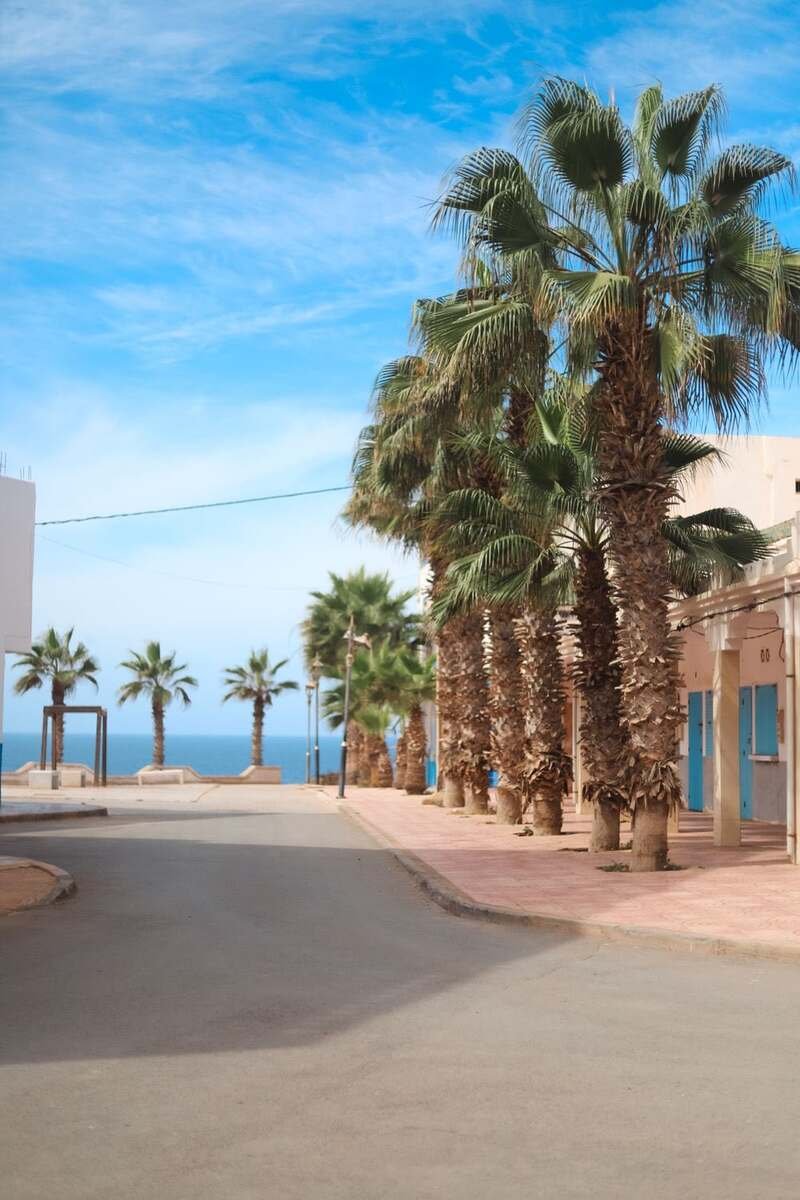 A palm-lined street running down towards the sea.
Banknotes in circulation: 20, 50, 100, and 200 MAD. The 200 MAD note (worth roughly £15 / €18 / US$20 at 2026 rates) is the most useful denomination - widely accepted and easy to break at most shops and cafes.
Coins: 1, 2, 5, and 10 MAD, plus 50 centimes (half a dirham). The small coins add up - markets and taxis price items in 50-centime increments, so don’t throw them away.
Approximate exchange rate (2026): 1 GBP ≈ 13–14 MAD | 1 EUR ≈ 11–12 MAD | 1 USD ≈ 10–11 MAD. Rates fluctuate, so check before travelling.
Best Places to Exchange Money
Agadir banks offer the best exchange rates and the most reliable service. The main options on Boulevard Hassan II and in the city centre include Attijariwafa Bank, CIH, BMCE (now Bank of Africa), and Crédit Agricole. Rates between branches are broadly similar - within 1–2% - since the exchange rate in Morocco is regulated.
Agadir Al Massira Airport has exchange bureaus in the arrivals hall. Rates are slightly less competitive than city banks (typically 3–5% below mid-market), but convenient if you want dirhams in hand before leaving the airport. It is worth changing at least 500–800 MAD on arrival to cover your taxi or transfer and first day of expenses.
Exchange booths in the Agadir medina can match or beat bank rates, particularly around Rue de la Foire. Compare the rate displayed before handing over cash - legitimate booths post their rates visibly.
Avoid: hotel exchange desks (poor rates), unofficial street exchangers (illegal and risky), and airport kiosks in the departure lounge (high commissions).
Keep your exchange receipts. Technically you need them to reconvert MAD back to your home currency on departure, though this is rarely enforced at the border.
ATMs in and Around Taghazout
Taghazout village has one or two ATMs, but their reliability with foreign cards is inconsistent - they can run out of cash during busy peak season weekends (November through February) when multiple surf camp guests are withdrawing on the same day.
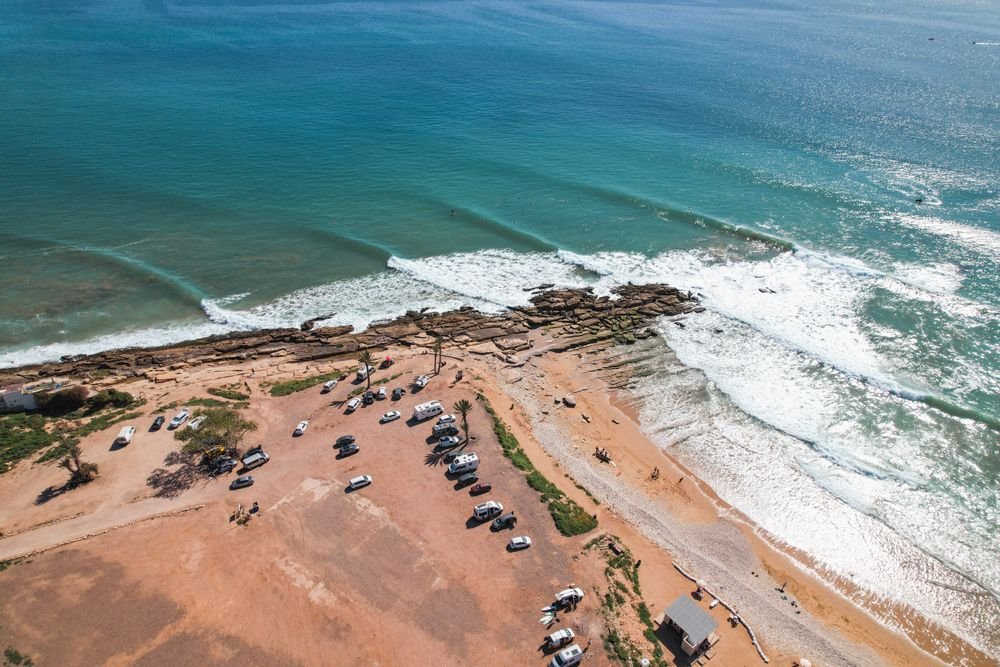 Waves breaking along a long beach, seen from above with a car park behind the sand.
The practical approach: withdraw in Agadir before heading to Taghazout. Agadir has full ATM coverage from all major Moroccan banks, with machines at the airport arrivals hall, in the city centre, and at petrol stations along the N1 road.
ATMs in Tamraght (3 km north of Taghazout): two confirmed ATMs as of 2026 - one at the Afriquia petrol station and one near the campsite. More reliable than Taghazout village, and worth a quick stop if you need cash top-up.
For full ATM locations, withdrawal limits, and fee details, see our dedicated ATMs in Taghazout and Tamraght guide.
ATM fees: Moroccan ATMs typically charge 25–50 MAD per transaction (most commonly 35 MAD), on top of whatever fee your home bank charges. Withdraw larger amounts less frequently to minimise this.
Low-fee cards for Morocco: Revolut and Wise both work well in Moroccan ATMs. When prompted, always choose to be charged in MAD (local currency) - never accept dynamic currency conversion in your home currency, which adds a hidden 3–6% markup.
BMCI is the only Global ATM Alliance member in Morocco, making it potentially fee-free for partner bank cardholders (check your bank’s alliance membership before travelling).
Are Cards Accepted?
Mostly no - not in Taghazout village. The everyday economy here runs on cash:
- Cash only: cafes, local restaurants, taxis, grand taxis to Agadir, surf board rentals, wetsuit hire, street food, market stalls, most surf shops
- Card sometimes accepted: larger surf camps (for booking deposits or full payment on arrival), supermarkets in Agadir, restaurants in Agadir, petrol stations
- Card usually accepted: hotels in Agadir (Atlantica, Fairmont Taghazout Bay), larger tour operators
If you are staying at a surf camp, check their payment policy before arrival - many accept card for the booking but expect cash for additional sessions, rentals, and extras on-site.
Tipping Norms
Tipping is customary in Morocco and genuinely appreciated - wages in hospitality and services are low. It is never mandatory, and refusing is not offensive. A brief guide:
| Situation | Typical tip |
|---|---|
| Restaurant (sit-down) | 10% of the bill |
| Cafe / snack bar | Round up, or 5–10 MAD |
| Surf lesson / instructor | 20–50 MAD per session |
| Hammam attendant | 20–30 MAD |
| Grand taxi | Round up to next 5 MAD |
| Guided tour (half day) | 20–50 MAD per person |
| Hotel porter / room service | 10–20 MAD |
| Parking attendant | 5 MAD |
Always tip in cash - tipping on a card terminal is not standard practice at smaller establishments and the money does not reliably reach the server.
Cash vs Card: Our Recommendation
Bring more cash than you think you need - this is not a destination where you can rely on tapping your card. A practical setup for a week in Taghazout:
- Arrive with 500–800 MAD already exchanged (airport or pre-arranged)
- Withdraw 2,000–3,000 MAD in Agadir on your first day or before leaving the airport
- Keep 500–1,000 MAD on your person for daily expenses
- Top up in Tamraght if needed - less effort than an Agadir trip
Budget reference - mid-range day in Taghazout:
- Coffee and breakfast: 40–60 MAD
- Lunch at a local cafe: 60–100 MAD
- Surf lesson or board hire: 150–250 MAD
- Grand taxi to Agadir: 25–30 MAD each way
- Dinner at a restaurant: 70–130 MAD
That puts a typical day at 350–570 MAD (approximately £25–£42) before accommodation.
A Revolut or Wise card as a backup is a sensible safety net - good exchange rates if you need emergency cash from an ATM, and useful for paying at any rare card-accepting merchant. But do not arrive expecting to live on contactless: Taghazout requires cash.
Exchange rates as of 2026. Verify current rates before travelling.
ATMs in Taghazout and Tamraght - full guide Getting around the Taghazout area Morocco packing list for a surf trip Is Taghazout safe? What to know before you go Tipping in Morocco: the full guide