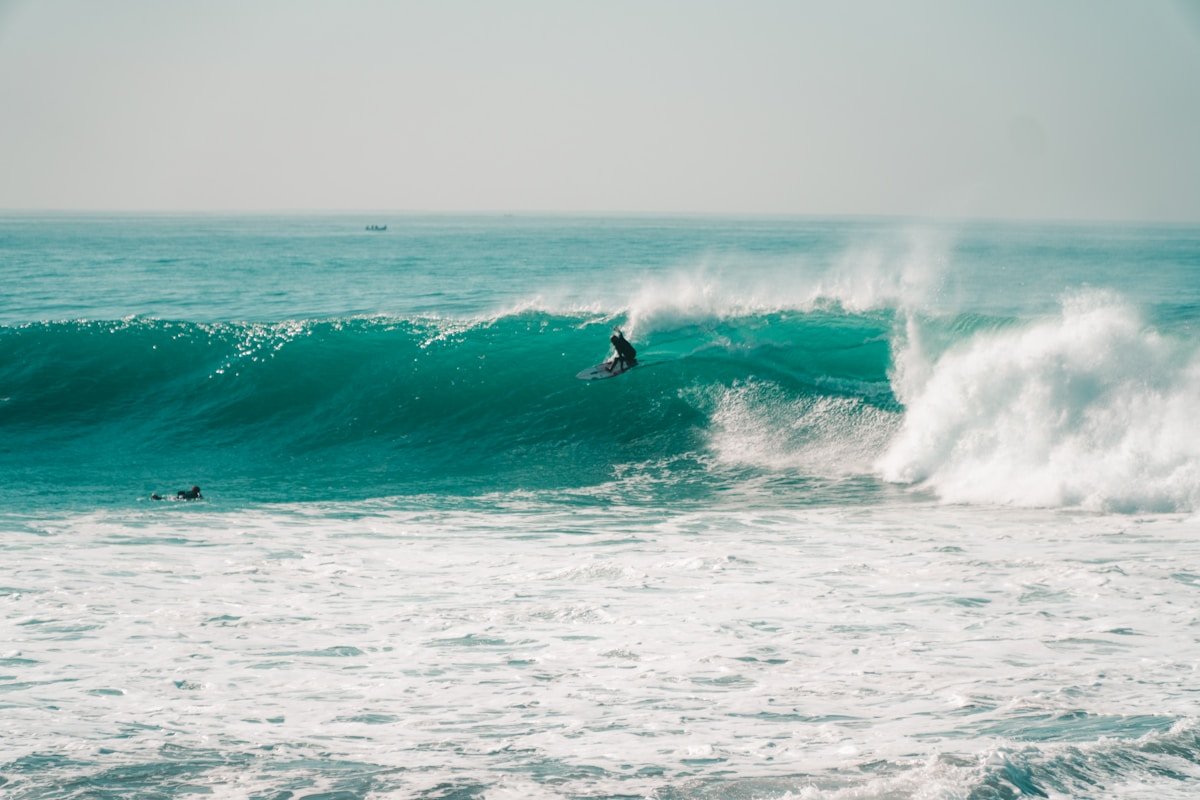
Taghazout is one of the most approachable world-class surf destinations — close to Europe, affordable, warm, and with waves for every level. Here is how to plan a surf trip that matches your level and budget.
When to Go
Peak surf season: November–March. Atlantic swells are most consistent; Anchor Point, Mysteries, and Killers are running. Water temperature requires a 3/2 wetsuit. Book surf lessons in Taghazout well in advance for peak months — slots fill quickly.
Search hotels in Taghazout on Booking.com
Best for beginners: March–May and September–October. Smaller, cleaner swell; surf schools at full operation; warm weather.
Summer (June–August): Low swell — good for beach relaxation and beginners, not for wave-hungry surfers.
See the best time to visit Taghazout for full month-by-month detail.
Choosing Accommodation
Surf Camps
All-in-one packages covering accommodation, surf coaching, boards/wetsuits, breakfast and dinner. Best for:
- Beginners who want structured progression
- Solo travellers who want to meet people
- Those who don’t want to think about logistics
Price range: approximately £350–700 per person per week as of 2026, depending on accommodation standard and inclusion. Surf Maroc is the best-known operator in the area and runs several properties including Surf Village and The Point. Tamraght Surf House and Taghazout Surf House both run smaller, more social camps. See the surf camps guide for full comparison.
Independent Riads and Guesthouses
Better for experienced surfers who want to surf different spots, manage their own schedule, and explore beyond Taghazout. Riads in the village range from budget rooms (200–350 MAD/night) to boutique properties (400–700 MAD/night). See the boutique riads guide.
A Typical Day on a Surf Trip
The rhythm of a Taghazout surf trip is dictated by tides and wind. Most experienced surfers structure their day around two sessions:
- Dawn patrol (6:30–7:30am): Offshore winds are most reliable at first light. Water is glassy and the lineups are quiet. Often the best session of the day.
- Morning session (8am–12pm): Peak surf window. Beginners at Banana Point with a school group; experienced surfers at Anchor Point or Hash Point depending on the swell.
- Midday rest: 12–3pm is the hottest part of the day and winds often switch onshore. Local surfers don’t surf in this window. Eat, sleep, drink mint tea.
- Afternoon session (3:30–6pm): Second session of the day. Light is better for the golden hour period before sunset; conditions are variable but afternoon swells can be excellent.
Surf Schools and Boards
See the surf schools guide for the main operators. For board hire without a lesson, see the surfboard rental guide.
A typical daily hire setup: soft-top learner board or mid-length from approximately 100–150 MAD/day, wetsuit 50 MAD/day as of 2026. You can also pre-book surfboard rental in Taghazout online.
Key Surf Spots
| Spot | Level | Type |
|---|---|---|
| Banana Point | Beginner | Beach break |
| Hash Point | Intermediate | Right-hand reef |
| Anchor Point | Advanced | Long right-hand point break |
| Mysteries | Advanced | Powerful right-hander |
| Killers | Advanced | Heavy, fast right-hander |
| Imsouane | Intermediate/Advanced | Long mellow right-hander |
Full guides for each break are linked from the surf spots section. See also the surf forecast guide and the full breakdown of Morocco’s surf destinations.
Flat Days: What to Do When There’s No Surf
Flat days happen, especially in summer. They’re not wasted days:
- Surfskate: The Taghazout Skatepark runs classes and rents boards — good for keeping the hip rotation active on land
- Paradise Valley: The single best day trip from Taghazout. A 30-minute drive inland to a dramatic gorge with natural pools. See the Paradise Valley guide
- Essaouira: A full-day trip north (2.5 hours) to one of Morocco’s most interesting coastal towns. Worth doing at least once
- Yoga: Most surf camps and several independent studios run morning sessions
- Agadir: 20 minutes south for shopping, supermarkets, or a bigger-city day
What to Pack for a Surf Trip
- Wetsuit (3/2 for November–April, 2mm shorty for May–October) — available for hire locally if you don’t own one
- Rashguard and boardshorts
- Reef boots (useful for sharp reef at Anchor Point)
- Sunscreen (SPF 50+) — Atlantic UV is intense even in winter
- Wax (locally available but bring a bar)
- Decent sunglasses with UV protection
- Light layers for evenings
See the full packing list.
Budget
See the Taghazout budget guide for full breakdown. Rough guide for a 7-day surf trip as of 2026:
- Surf camp (all-in): approximately £350–700 per week
- Independent (accommodation + food + board hire + lessons): approximately £200–450 per week
- International flights to Agadir: approximately £80–200 return from UK (Ryanair, easyJet, Jet2)
- Travel insurance: cover for Morocco from approximately €30–60 for a week-long trip
Getting There
Fly to Agadir Al Massira Airport (AGA) — 25–30 minutes from Taghazout by grand taxi. From the airport, a private grand taxi costs approximately 300 MAD (daytime). The Souk to Surf shuttle runs from the airport directly to Taghazout and is the best option if you’re travelling with a surfboard. Pre-booked airport transfers are available for fixed-price, meet-and-greet service.
One-week Morocco surf trip itinerary Taghazout surf forecast guide Getting to Taghazout from Marrakech Morocco surf destinations compared Surfskate rental in Taghazout