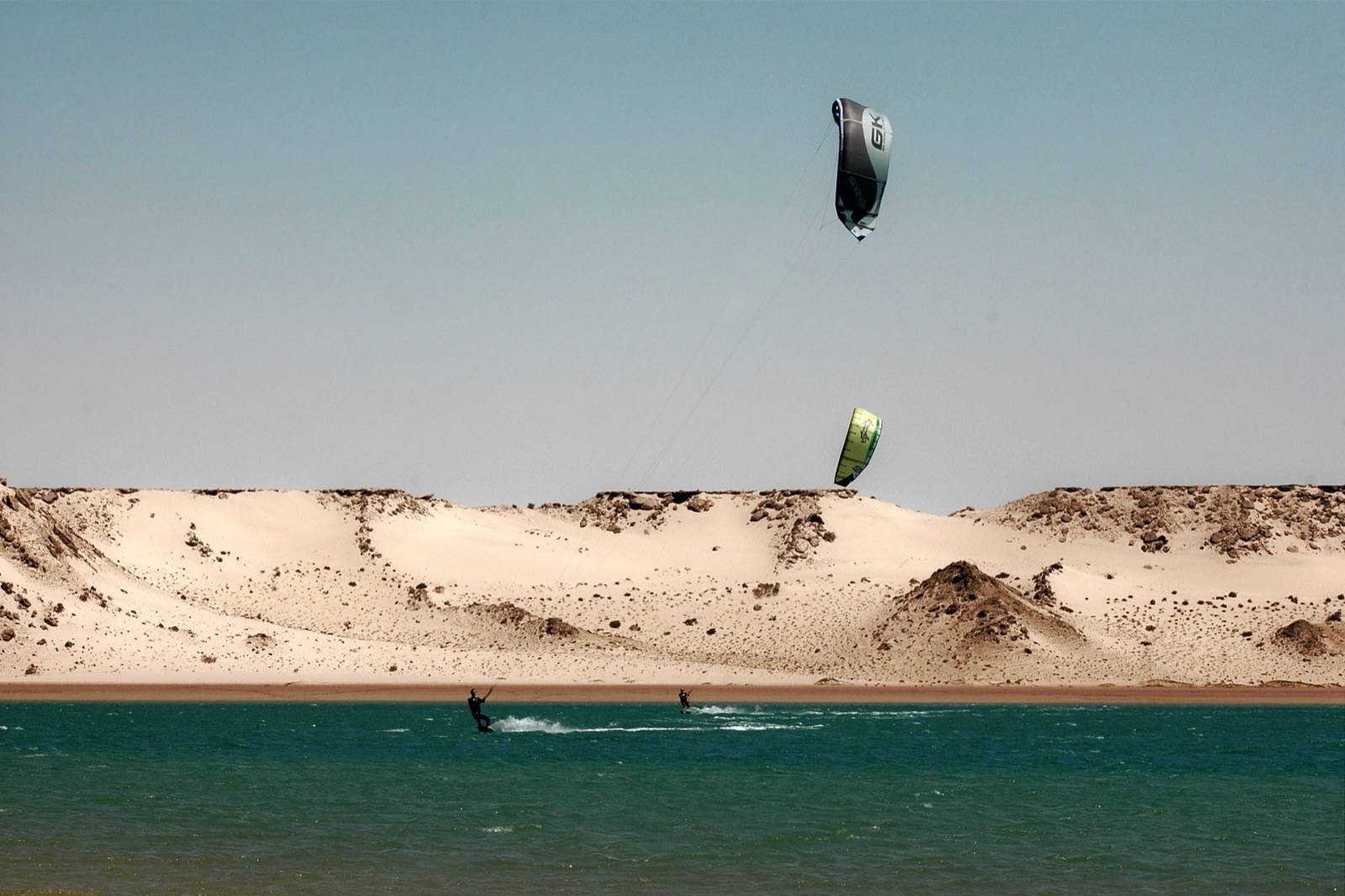
Morocco has two surf destinations that consistently come up in conversations about Atlantic wave-chasing: Taghazout in the north and Dakhla in the deep south. They share the same ocean but almost nothing else - different waves, different landscapes, different crowds, and a 1,680-km gap between them. Here is how they compare across every category that matters.
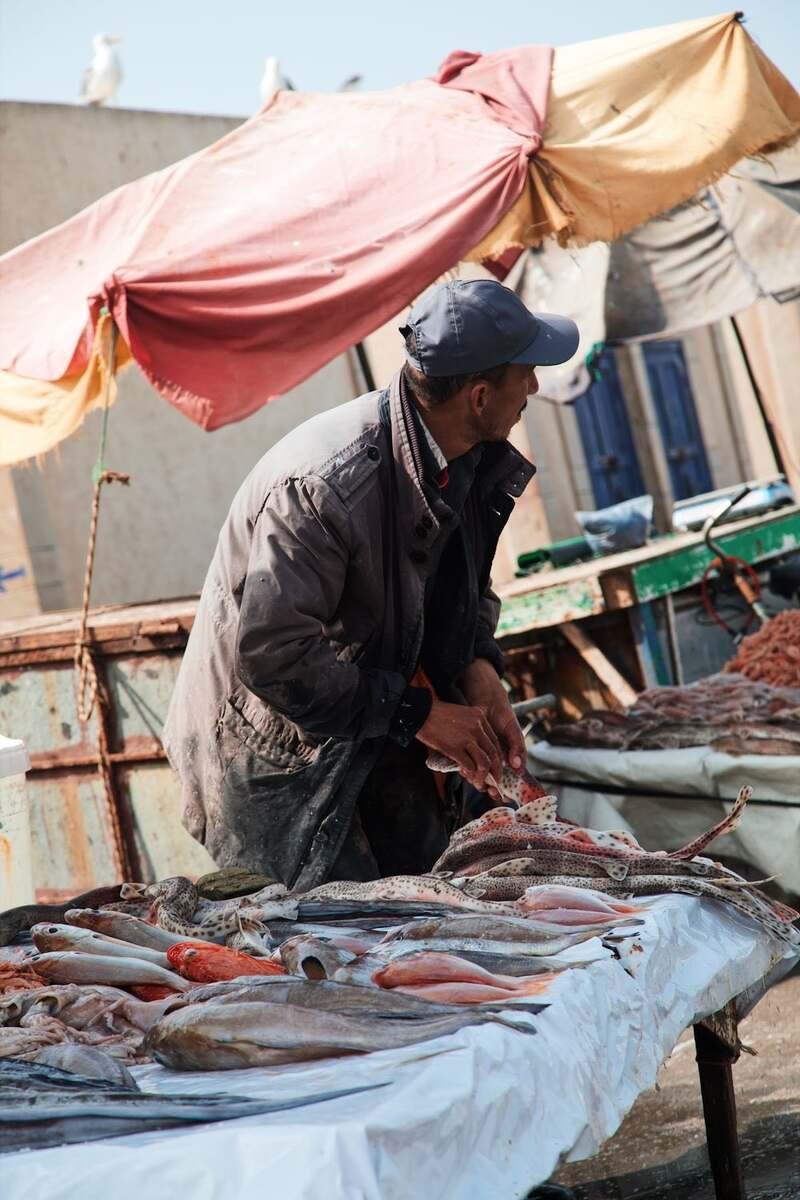 A fish vendor at his stall under a parasol.
Location and Access
Taghazout sits 20 km north of Agadir, a 30-minute taxi or transfer from Al Massira Airport. Agadir is well connected from the UK, France, Germany, and the Netherlands - Ryanair, easyJet, Transavia, and TUI all operate direct routes. From the airport to Taghazout costs approximately 100–150 MAD by grand taxi as of 2026.
Dakhla is 1,680 km south of Agadir, deep into the Western Sahara. The practical way in is flying: Royal Air Maroc operates Casablanca–Dakhla direct (approximately 2 hours) and Agadir–Dakhla via Casablanca. Budget approximately 600–1,200 MAD for the internal flight return. There is no direct international service to Dakhla’s airport, so factor in a connection. Overland travellers do make the drive from Agadir, but it is a two-day commitment through largely featureless desert.
The Waves
Taghazout is Morocco’s best-organised surf destination for variety. Anchor Point is a long, powerful right-hand point break handling swells from 2 to 8 feet - one of the best waves in Africa when firing. Hash Point (directly below the village) is a shorter, punchy right-hander suited to intermediates. Banana Point and Tamraght beach break are ideal for beginners. Killers and Mysteries add expert-only options. Most breaks work best from October to April, when Atlantic swells peak.
Dakhla is primarily a kite and windsurf destination. The lagoon - a sheltered inland bay approximately 40 km long - produces flat to small-chop conditions ideal for kitesurfers and windsurfers of all levels. Ocean-side surf spots exist at Dragon Bay and Lover’s Beach, picking up solid swells from November to March. These are powerful, exposed breaks that suit intermediate to advanced surfers only - no beginner infrastructure and no surf schools comparable to Taghazout’s offering.
Wave quality in a direct comparison: Taghazout wins for surf variety and beginner access. Dakhla wins for flat-water kite/windsurf.
Accommodation and Cost
Taghazout: Established surf camp infrastructure from well-run operations like Surf Maroc (from approximately 5,000 MAD per week full-board as of 2026), Amouage, and Hash Point Surf Camp. Independent accommodation ranges from basic guesthouses at approximately 150–250 MAD per night to boutique riads from 400 MAD. Budget travellers can eat well on 80–120 MAD per day for meals.
Dakhla: Kite camps dominate the accommodation scene - Dakhla Attitude, Dakhla Club Hotel, and Ocean Vagabond are the main operators. Packages run approximately €60–130 per person per night including equipment rental and instruction. Independent guesthouses exist in Dakhla town (approximately 20 km from the lagoon) at lower prices, but most visitors book all-inclusive kite packages. Restaurants in town are simple - expect 50–90 MAD for a meal. Total daily spend outside a camp: approximately 150–250 MAD.
Budget summary: Taghazout is the more accessible option for travellers on mid-range budgets. Dakhla’s kite camp pricing is reasonable for what’s included but less flexible for independent travellers.
Vibe and Crowd
Taghazout is a genuinely mixed scene - surf camps bring European travellers, Moroccan locals retain a real presence in the village, and the souk on Wednesday in nearby Aourir is a proper local market. The village is compact but lively, with rooftop cafes, a yoga scene, and evening socialising at surf camp terraces.
Dakhla feels more remote and isolated - in the best possible way for those seeking it. The lagoon setting (sand dunes meeting flat water meeting sky) is visually spectacular. The kite crowd is international and predominantly experienced. There is less of a backpacker/group-trip scene and more of a specialist-sport focus. Dakhla town itself is a functional Saharan city - interesting for an afternoon but not a cultural draw in the way that Essaouira or Marrakech are.
Best Season
Taghazout: October to April for surf (consistent Atlantic swells). May to September for learners and warm-water swimming - summer waves are smaller and more manageable. Year-round destination with something for every level every month.
Dakhla: November to April for ocean surf (biggest swells). Year-round for kitesurfing - the lagoon works in all months, with the strongest and most reliable winds from November to April. Summer months (June to August) are extremely hot - air temperatures regularly exceed 40°C, though the Atlantic keeps the water at approximately 22–25°C.
Who Should Go Where
| Traveller type | Recommendation |
|---|---|
| Complete beginner surfer | Taghazout |
| Intermediate surfer wanting variety | Taghazout |
| Advanced surfer wanting powerful point breaks | Taghazout (Anchor Point) |
| Kitesurfer (any level) | Dakhla |
| Windsurfer | Dakhla |
| Longboarder | Taghazout |
| First time in Morocco | Taghazout |
| Second trip, wanting something different | Dakhla |
| Desert landscape and remoteness | Dakhla |
| Budget-conscious | Taghazout |
The Verdict
Taghazout and Dakhla are not really competing for the same traveller. Taghazout is Morocco’s best all-round surf destination - varied breaks, beginner infrastructure, cultural atmosphere, easy access. Dakhla is Morocco’s premier kite and windsurf destination with an ocean-side surf offering that suits experienced surfers who want something rawer and more remote.
For your first Morocco surf trip, Taghazout. For your third or fourth - and especially if you ride a kite or are an advanced surfer who wants to combine a proper point break with something genuinely wild - Dakhla earns a separate trip.
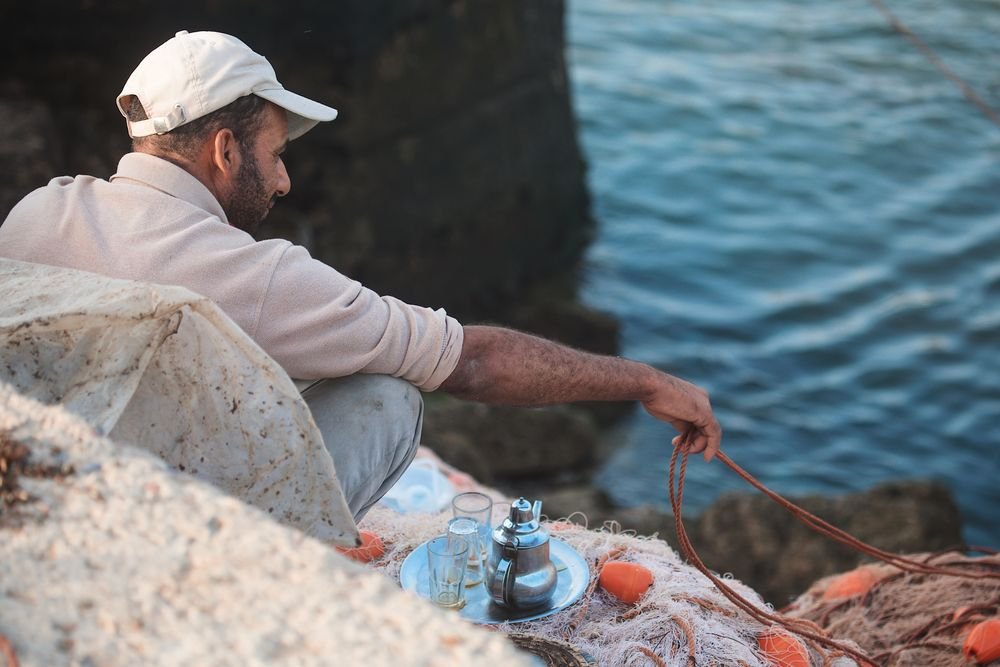 A fisherman mending nets by the water, with a tea tray beside him.
See also:
- Morocco surf destinations: all spots compared - Taghazout, Imsouane, Dakhla, and more
- Surf camps in Taghazout - the main camp options and what each offers
- Taghazout surf spots compared - Anchor Point vs Hash Point vs Killers
- Best time to visit Taghazout - month-by-month swell and weather breakdown
- Taghazout vs Imsouane - comparing Morocco’s two top surf villages
Related comparisons: Taghazout vs Agadir · Taghazout vs Essaouira · Taghazout vs Mirleft