Essaouira: Morocco's Best Month for Kitesurfing in July
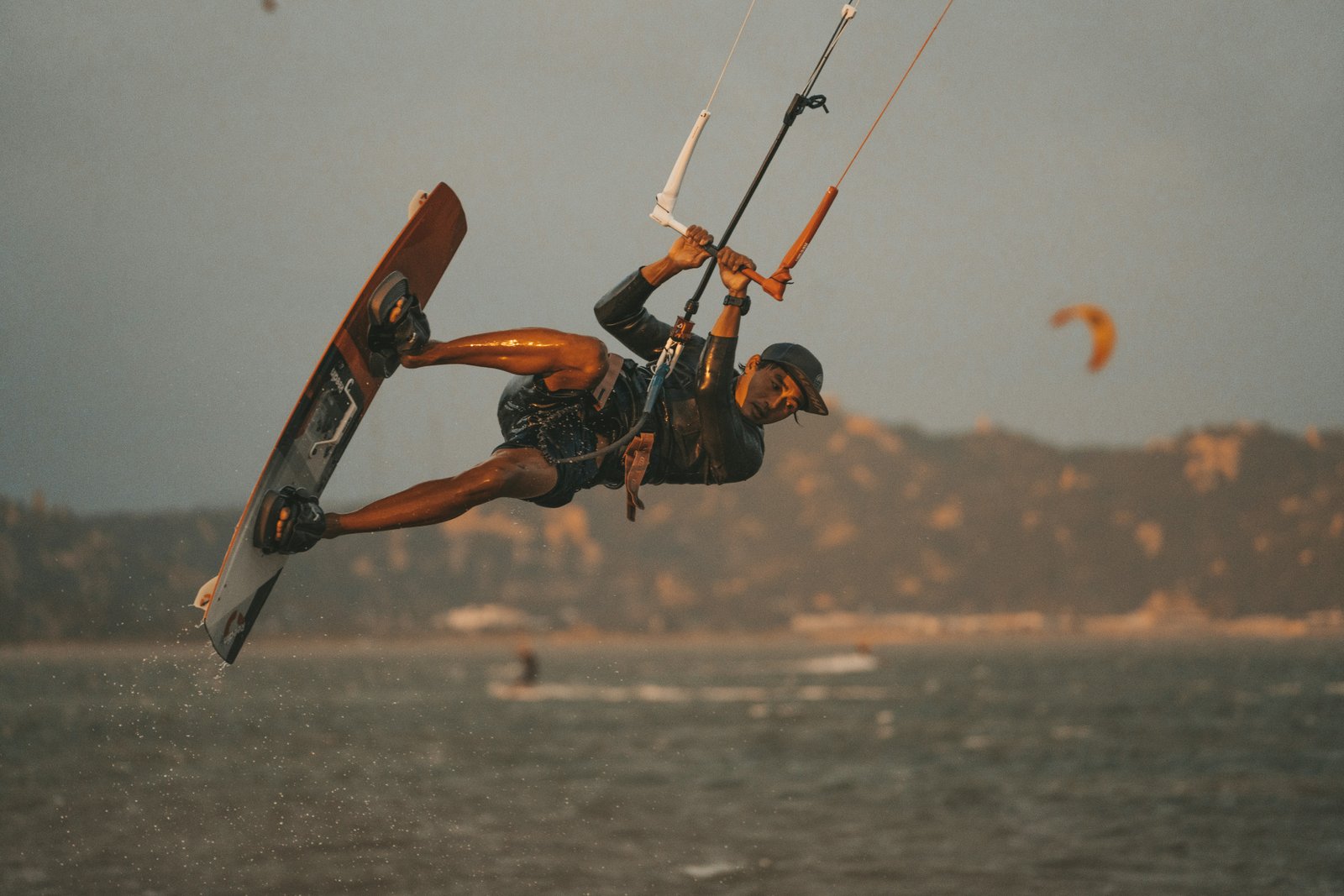
While Taghazout’s point breaks tend quiet in summer — flat Atlantic swell is the norm from June to September — the wind tells a different story 170 km north at Essaouira. July and August are when the Alizé trade winds blow hardest and most consistently along Morocco’s Atlantic coast, making Essaouira one of the most reliable kitesurfing destinations in the world during these months.
The Alizé Wind
The Alizé is a thermal wind driven by the pressure difference between the hot Saharan interior and the cooler Atlantic ocean. It builds through the morning and typically peaks in the afternoon at 20–35 knots, then drops toward evening. From late June through August, these conditions are almost daily. Windsurfers discovered Essaouira in the 1980s for exactly this reason; the kite community arrived in the following decade and has grown steadily since.
The beach at Essaouira stretches roughly 10 km south of the medina, with the active kite launch zones concentrated on the southern section away from the bathing area. The Atlantic water here is cool even in summer — around 18–20°C — so a full wetsuit is standard practice even in July heat.
Kite Schools and Rental
Essaouira has a cluster of established kite schools along the beach road south of the medina. Most offer IKO-certified instruction, equipment rental, and multi-day packages. Beginner courses typically cover three days of progressive water time; intermediate and advanced riders can rent gear independently. Equipment quality has improved substantially over the past few years, with most schools running current-year boards and kites.
Recommended to book school time and accommodation a few weeks in advance in July and August — the town fills with kitesurfers from across Europe, and the better schools reach capacity quickly.
Essaouira as a Base
The medina of Essaouira is a UNESCO World Heritage Site — a compact 18th-century Portuguese-influenced walled town with blue fishing boats, whitewashed ramparts, and a functioning artisan district. It has a different character to the surf towns further south: more medina atmosphere, better restaurant choice, and a year-round population of artists, craftspeople, and musicians. The annual Gnaoua World Music Festival (held in late June) has already passed by July, but the spirit of the town carries through summer regardless.
From Taghazout, Essaouira is around three hours by road — too far for a one-day turnaround unless you have your own transport and energy for a long day. Most surfers come for two to three nights, which allows a proper kite session, a half-day in the medina, and a meal at one of the harbour fish restaurants before heading back south. Our day trip from Taghazout to Essaouira guide has the options for getting there, including grand taxi and CTM bus.
Combining Kite and Surf
For those based in Taghazout with mixed abilities in a group — some surfers, some wanting to try kite — the split works well in July. The surf at Taghazout itself is best for beginners this month: consistent small swell at Panoramas and Devil’s Rock without the larger winter sets, and the kitesurfing in Morocco guide has more detail on the Essaouira coast in the broader context of Moroccan kite spots.
For a full picture of conditions across the year, our Taghazout in July guide covers the surf forecast, weather, and what to prioritise during a midsummer trip.