Morocco and Portugal share the same Atlantic swell window, compete for the same European surf traveller, and both offer legitimate world-class waves. Choosing between them depends on what kind of surf trip you want: Morocco is the better-value option with long, uncrowded point breaks and a different cultural experience; Portugal is the more accessible choice with Ericeira (a World Surfing Reserve), Peniche, and Nazaré, all well-supported by infrastructure and easy to reach year-round.
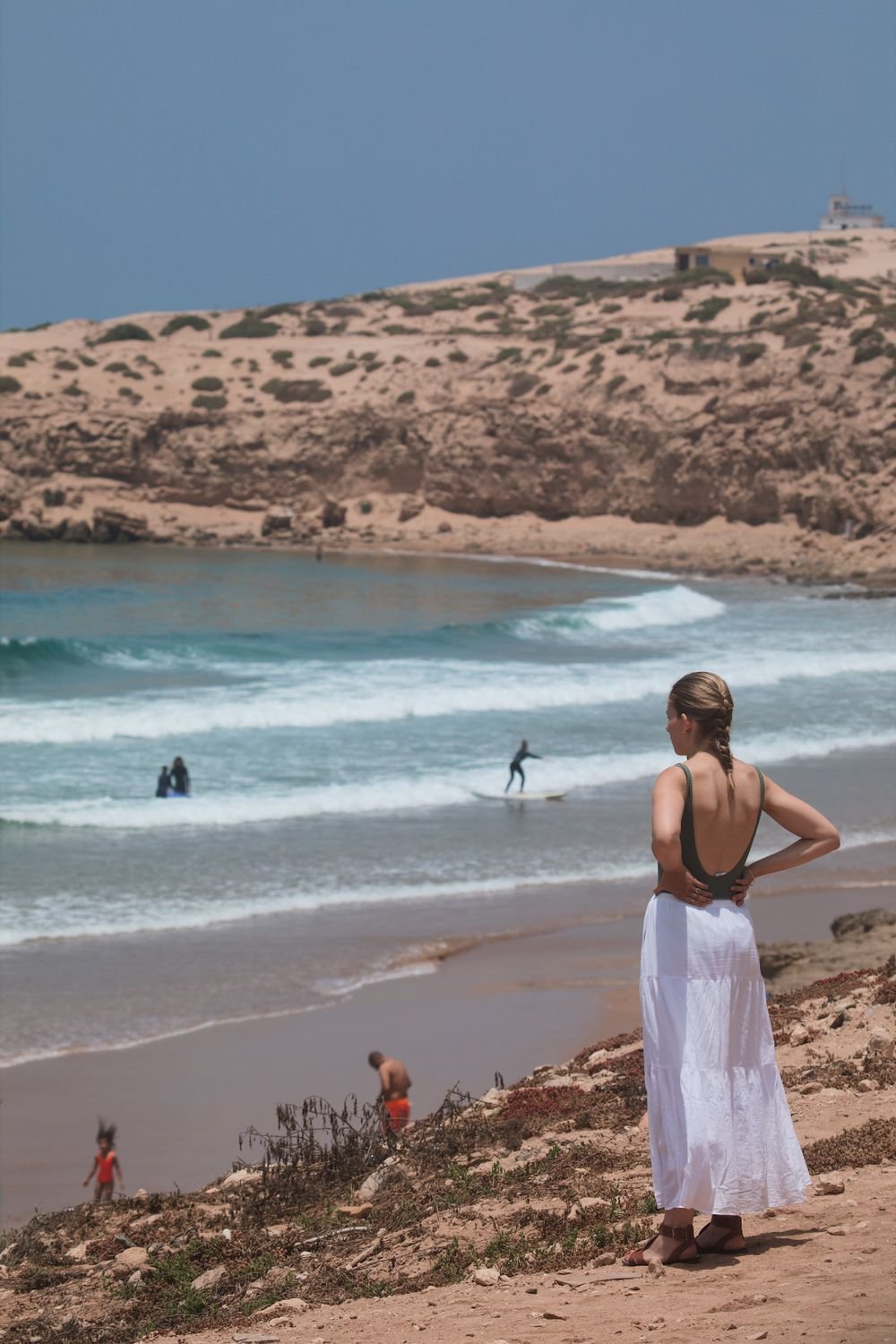 A woman in a white dress watching surfers from the rocks above the beach.
Here is the full comparison.
The Waves
Morocco (Taghazout and surrounds): The headline wave is Anchor Point - a long, grinding right-hand point break that produces rides of 200 metres or more on a quality swell. Taghazout also offers Hash Point (shorter, punchier), Mysteries (hollow left and right), Killers (heavy, expert-only reef), and Imsouane’s Cathedral (Morocco’s longest wave, a slow, mellow right suited to longboarders and intermediates). Swell is consistent from October to April, dropping to smaller, playful waves in summer.
Portugal (Peniche, Ericeira, Nazaré): Peniche is home to Supertubos - one of Europe’s best beach breaks, hosting the WSL Championship Tour. It is a powerful, heavy wave suited to experienced shortboarders. Ericeira, a World Surfing Reserve, has seven breaks within a small area ranging from beginner beach to expert reef (Coxos, Ribeira d’Ilhas). Nazaré is famous for its winter big waves (up to 30 metres on the biggest swells), though it is a spectator sport rather than a surf break for most people. The Algarve coast adds beach breaks suited to beginners and intermediates.
Wave comparison: Morocco offers longer, more consistent right-hand point breaks that reward intermediate and advanced surfers. Portugal has more variety in break type and more of the heavy beach break power that European competitive surfers prize.
Water Temperature and Wetsuits
Morocco: Water temperature ranges from approximately 17–19°C in winter to 21–23°C in summer. A 3/2mm wetsuit covers winter months; summer surf in a 2mm shorty or even boardshorts is feasible on warmer days.
Portugal: Water temperature ranges from approximately 14–16°C in winter to 19–21°C in summer - consistently colder than Morocco at the same time of year. A 4/3mm wetsuit is recommended for winter surf in Portugal; a 3/2mm suits spring and autumn.
If cold water is a disincentive, Morocco wins. The temperature difference of 3–4°C makes a meaningful difference to comfort, particularly on multi-session days.
Cost Comparison
Morocco (Taghazout, week-long trip):
- Surf camp (accommodation + lessons + equipment): approximately €400–750
- Independent hostel/guesthouse: approximately €15–25 per night
- Daily food budget: approximately €10–20 per day
- Surf lesson (group, 2 hours): approximately €15–25
Portugal (Peniche or Ericeira, week-long trip):
- Surf camp (accommodation + lessons + equipment): approximately €600–1,000
- Independent hostel: approximately €20–35 per night
- Daily food budget: approximately €20–35 per day
- Surf lesson (group, 2 hours): approximately €25–45
Morocco is approximately 30–40% cheaper across all categories. For budget-conscious travellers or those planning longer trips, this difference is significant.
Getting There from the UK and Europe
Morocco (Agadir): 3 to 3.5 hours from London Stansted, Gatwick, Luton, and Bristol. Direct routes also from Amsterdam, Paris Beauvais, Madrid, and several other European cities. Ryanair, easyJet, Jet2, TUI, and Transavia operate regular services.
Portugal (Lisbon, Faro, Porto): Extremely well connected - dozens of airlines serve Portuguese airports from across Europe. Lisbon is 2.5 hours from London; Faro (for the Algarve) is 2 hours 20 minutes. Competitive pricing from most UK and European cities, with more frequency than Moroccan routes.
Logistics once arrived:
- Taghazout is 30 minutes from Agadir Airport by taxi (approximately 100–150 MAD)
- Peniche is 1.5 hours from Lisbon by bus (approximately €8 each way)
- Ericeira is 45 minutes from Lisbon by bus or taxi
- For those driving: Portugal allows EU driving licences with no complications; Morocco requires an international driving permit for non-EU licences
The Cultural Experience
Morocco adds a cultural dimension that Portugal does not. The drive from Agadir through Taghazout and on to Imsouane passes argan trees, Berber villages, and a landscape that feels genuinely different from Europe. The food - tagine, couscous, fresh-caught grilled fish, msemen with honey - is part of the trip. The souk in nearby Aourir on Wednesday mornings, the hammam scene, the mint tea served everywhere: Morocco is a proper travel experience alongside the surf.
Portugal is familiar and comfortable. Peniche and Ericeira have good restaurants, strong coffee, and infrastructure indistinguishable from any other mid-sized European coastal town. That is either a comfort or a missed opportunity depending on what you want from a surf trip.
Crowds and Line-Up Culture
Morocco: Anchor Point can get busy during peak swells (November to February) as surf camps fill and visiting surfers converge on the best conditions. Outside of peak conditions, the line-up thins considerably. The reef and point nature of Morocco’s breaks means sessions tend to be more organised than busy beach breaks.
Portugal: Supertubos at peak swell is one of the most competitive line-ups in Europe. Ericeira’s Ribeira d’Ilhas hosts WSL competition and draws serious surfers year-round. Ericeira and Peniche have developed significant surf tourism industries - during high season (July–September), some breaks are very crowded. Out of season, crowd levels drop substantially.
Who Should Go Where
| Traveller profile | Recommendation |
|---|---|
| Complete beginner, summer trip | Portugal (Algarve) or Morocco (Taghazout) equally |
| Beginner wanting warm water in winter | Morocco (Taghazout) |
| Intermediate surfer, first Atlantic surf trip | Taghazout (Morocco) |
| Advanced shortboarder wanting beach break power | Portugal (Supertubos, Ericeira) |
| Longboarder | Morocco (Imsouane Cathedral) |
| Big wave experience | Portugal (Nazaré in winter) |
| Budget-conscious | Morocco |
| Wants easier logistics, no cultural adjustment | Portugal |
| Cultural experience alongside surf | Morocco |
| Group trip, mixed ability levels | Taghazout, Morocco |
The Verdict
Morocco is the better surf destination for value, point break quality, and cultural experience. Portugal is the better choice for beach break power, year-round accessibility, and logistical simplicity.
Most intermediate surfers planning a first Atlantic surf trip will get more from Taghazout: better value, longer waves, warmer water, and a genuinely different travel experience. Experienced shortboarders seeking the best European beach breaks, or surfers already familiar with Morocco, find Portugal’s competitive wave quality - particularly Supertubos and Coxos - harder to replicate elsewhere in Europe.
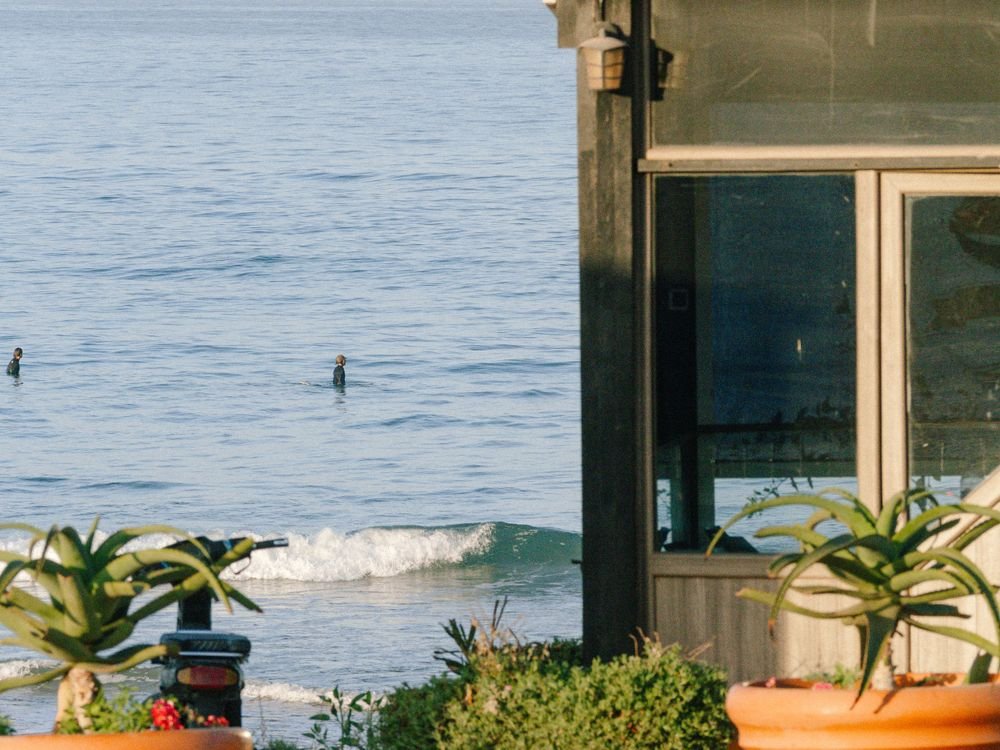 Ocean view from a terrace with surfers waiting in the distance.
For a one-week winter surf trip on a budget: Morocco. For a serious competitive-level surf mission or a summer trip with flexible dates: Portugal.
See also:
- Morocco surf destinations - Taghazout, Imsouane, Dakhla, and more
- Taghazout vs Imsouane - choosing between Morocco’s two top surf villages
- Surf camps in Taghazout - the main accommodation options for a Morocco surf trip
- Best time to visit Taghazout - month-by-month breakdown of surf conditions
- Taghazout surf spots compared - all the breaks, from beginner to expert
Related comparisons: Taghazout vs Dakhla · Taghazout vs Mirleft · Taghazout vs Essaouira