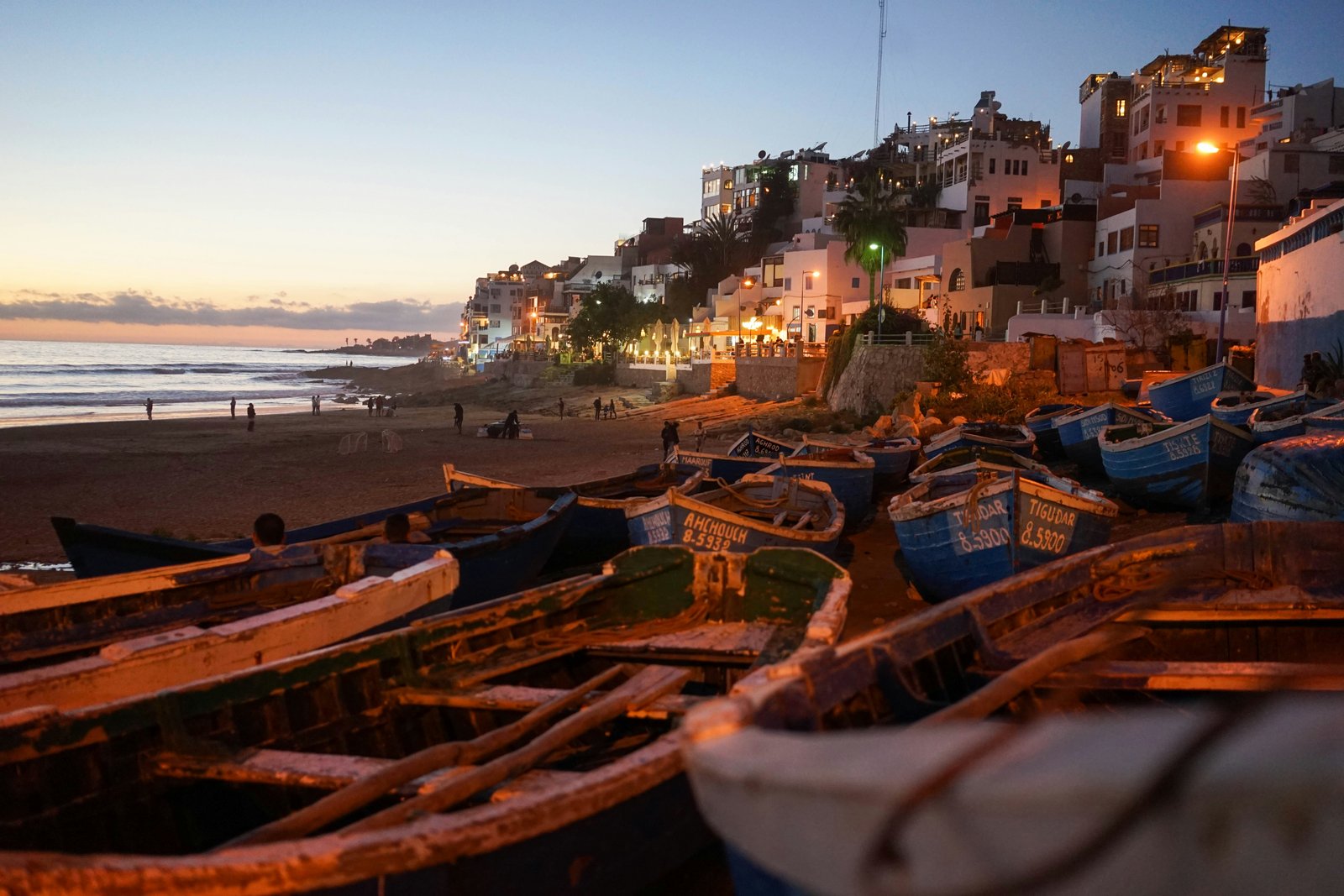
Morocco works well for solo travel. The country has decades of backpacker infrastructure, particularly along the surf coast, and Taghazout has built a solo travel culture that most Moroccan towns haven’t. The question isn’t whether to go solo - it’s how to do it well.
We also recommend reading the official UK Foreign Office travel advice for Morocco before you go, as it is updated when conditions change.
Is Morocco Good for Solo Travel?
Yes, and it has been for a long time. The surf towns along the Atlantic coast - Taghazout, Imsouane, Tamraght - draw solo travellers year-round. Surf camps are built specifically for the solo visitor: communal meals, shared rooms or private pods, guided sessions, and evening socials. You don’t need to arrive knowing anyone. The format does the work.
Search hotels in Taghazout on Booking.com
Away from the surf coast, Morocco’s established backpacker circuit (Marrakech, Essaouira, the Atlas, Sahara) is well-worn and easy to navigate independently. Riads, hostels, and guesthouses are priced and designed for single travellers. Grand taxis and buses connect everything cheaply.
The caveat: Morocco is not passive. You’ll need to be direct with touts, confident about prices, and self-aware in traditional areas. That’s not a reason not to go - it’s just the terrain.
Safety for Solo Travellers
Morocco is safe for solo travellers in the sense that violent crime against tourists is rare. The real friction is lower-level: persistent touts in medinas, inflated prices for obvious tourists, and occasional scams around transport and guides.
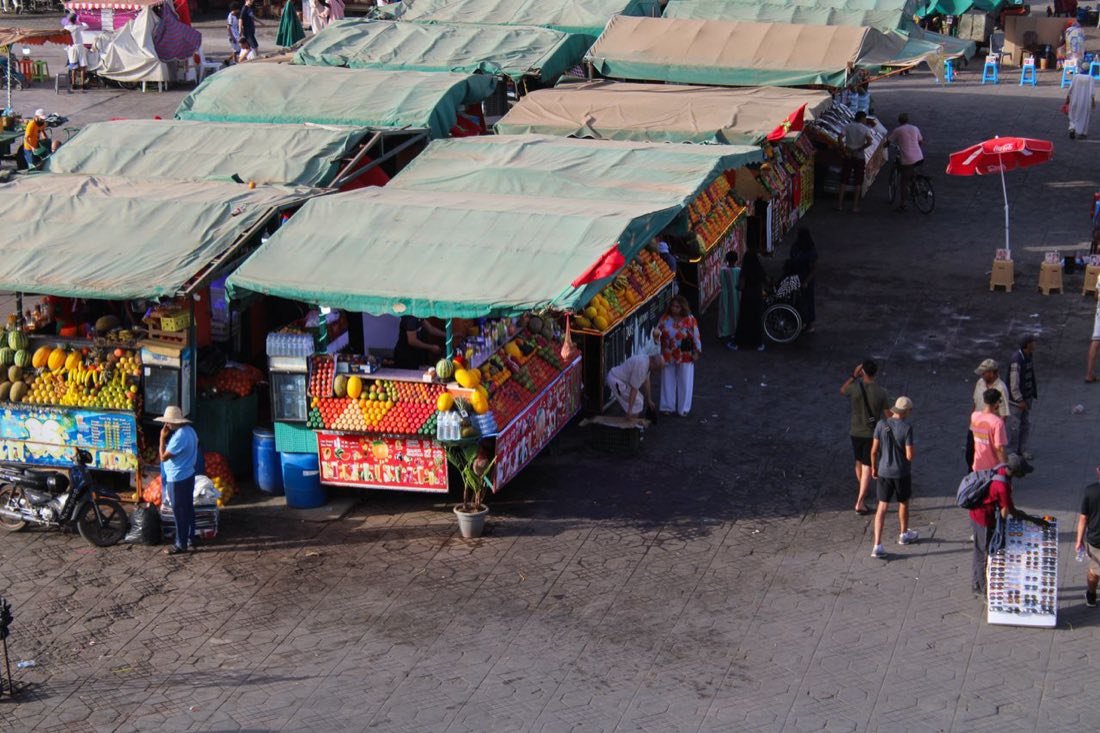 Fruit and vegetable stalls under awnings in a Moroccan souk.
Touts and faux guides are the main nuisance in cities. In Marrakech and Fez, men will offer to “show you the way” and then demand money or lead you to their cousin’s shop. The tactic is universal and the counter is simple: a firm, unapologetic “no thank you” delivered once and not revisited. Engaging at all - even politely - signals negotiating room.
In Taghazout, the tout dynamic is much milder. The village is small, locals know most visitors have surf camp connections, and there’s less of a scam economy than in Marrakech’s medina. You’ll encounter persistent offers but not the organised hustling of the major cities.
Petty theft is the other real concern, mainly in Agadir city rather than Taghazout village. Don’t leave valuables on café tables, keep phones in pockets in crowded areas, and use a small cross-body bag rather than a backpack in markets.
Solo Female Travel in Morocco
Harassment is a reality and worth naming honestly. Women travelling solo in Morocco report regular low-level street comments, unsolicited approaches, and persistent vendor attention. In Marrakech and Fez medinas, this can be relentless - especially away from main tourist routes. Walking alone at night in any Moroccan medina is not recommended.
Taghazout is a different environment. The international surf community is mixed-gender by default, the main street is short and well-lit, and the local population is used to Western women operating independently. The surf camp setting is genuinely safe - you’ll be surrounded by other travellers, there’s always someone around, and social dynamics discourage the isolation that creates risk.
Outside the beach: dress modestly. Covered shoulders and knees in the village and markets is the practical standard. On the beach, normal surf and swimwear is fine. This isn’t a values statement - it’s what reduces harassment by a meaningful amount, and most solo female travellers in Taghazout follow it without finding it restrictive.
Don’t walk back from anywhere alone after 10pm. Grand taxis between Taghazout, Tamraght, and Agadir run late and cost 5–15 MAD. Use them.
How to Meet People in Taghazout
The infrastructure for meeting people in Taghazout is unusually good for a small village.
Surf camps are the centre of the social scene. Surf Berbère, Surf Maroc, and Caramel Surf Camp all run communal dinner setups, and the shared activity of surfing creates natural conversation that other travel contexts don’t. If you’re staying in a surf camp, you’re already in the social structure.
Yoga retreat communities create similar crossover. Imsouane and Taghazout both attract yoga retreat crowds that often overlap with the surf camp scene - morning classes, shared meals, and the same beach. The yoga retreat scene around Taghazout draws a notably international crowd.
Hash House Harriers Agadir runs monthly social runs open to all. It’s a global running-and-drinking club with an Agadir chapter that pulls expats, long-stayers, and curious visitors. Check the “Expats in Morocco” Facebook group for current meet schedules.
Tamraght market day is worth making the effort for as a solo traveller. The village market draws locals from across the area and is a genuine cultural experience rather than a tourist one - and the kind of spontaneous conversation that happens at markets can go further than hostel common rooms.
Remote work communities have grown significantly around Agadir. Several coworking spaces in Agadir city run social events and have Slack channels where you can connect with other digital nomads working from the area. If you’re combining work and travel, this is a natural entry point.
Best Bases for Solo Travellers
Taghazout is the main hub and the right default for first-timers. The surf camp infrastructure is mature, accommodation ranges from budget dorms to private rooms in guesthouses, and the compact size of the village means you’ll see the same faces daily - social momentum builds quickly.
Imsouane is 70km north and considerably quieter. It suits the solo traveller who’s comfortable self-directing and wants a slower pace - fewer organised social events, more spontaneous interaction with local fishermen and surfers. The bay at Imsouane is exceptional and the vibe is unhurried.
Agadir is 20 minutes south and offers city amenities - airport access, reliable ATMs, shopping, and international restaurants. It’s not a solo travel destination in itself, but it’s useful as a base for day trips and for travellers who want more independence from the surf camp model. The beach at Agadir is long and largely undeveloped.
Group Tours Worth Taking
Day trips from Taghazout are one area where joining a group tour genuinely makes sense for solo travellers - both for logistics and for the social element.
The Essaouira day trip is the most popular excursion from the surf coast. The fortified Atlantic port city is 2.5 hours north, and doing it as a guided day tour means the transport and entry are handled, and you travel with a small group. Book an Essaouira day trip on GetYourGuide for availability and reviews.
Atlas Mountains day tours from Agadir - covering Imouzzer waterfall or Aït Benhaddou - are worth taking as group experiences. The drives require local knowledge of road conditions, and the group format keeps costs down versus private hire.
Paradise Valley is manageable independently with a grand taxi, but guided group tours include swimming spots that are hard to find without local knowledge.
Practical Solo Tips
Getting to Taghazout: Fly into Agadir Al Massira Airport. Grand taxis to Taghazout cost approximately 150–200 MAD (as of 2026) for a private hire, or you can take the no. 32 bus from Agadir city to Tamraght and walk 15 minutes north. Many surf camps offer airport pick-up as a paid add-on - worth it for the first visit.
Budget: Surf camp packages (accommodation + breakfast + surf guiding) run approximately $40–60 USD per day. Independent accommodation in guesthouses or riads is cheaper - from $20–30 for a private room - but you lose the built-in social structure. Add $10–20/day for meals at local cafés. Surf school sessions run approximately $30–50/day separately.
SIM cards: Buy an IAM or Orange SIM card from any phone shop in Agadir city centre. Bring your passport - registration is required. Data packages are cheap: roughly 50 MAD (approximately $5 as of 2026) for 10GB. If you prefer to avoid the SIM shop, an Airalo eSIM for Morocco can be purchased and installed before you leave home - no passport or shop visit required. Coverage is good in Taghazout and along the coast.
Surf camps vs independent accommodation: For first-time solo travellers, surf camps are the right choice. The social infrastructure does the hard work of connecting you with people. If you’ve travelled solo before and are comfortable finding your own way, independent guesthouses in Taghazout village or Tamraght give you more autonomy and are often cheaper.
Cash: Bring dirhams. Card acceptance is improving in Agadir but patchy in Taghazout. ATMs in Taghazout village work reliably (Attijariwafa Bank on the main road); draw cash before arriving at more remote beaches.
Best Time to Go Solo
October to April is peak surf season and when the camp social scenes are most active. Winter swells pull intermediate and experienced surfers; the crowd is experienced, internationally mixed, and has a high proportion of solo travellers. January and February are quieter overall but have the most consistent surf.
March to May is the sweet spot for general Morocco travel alongside surfing. Weather is warm but not hot, crowds are manageable, and the social scene at camps peaks before the summer wind-down. Ramadan timings shift year by year - check current dates before planning, as restaurant hours change significantly during the month.
June to September is warm and busy, but the surf flattens considerably. Kitesurf crowds replace surfers; families dominate the beach at Agadir. The solo travel scene is thinner in peak summer - camps still operate but the surf focus dissipates.
Prices and entry costs noted as of 2026. Verify current visa requirements at the Moroccan embassy for your country before travelling.
Is Taghazout safe? Full safety guide Safety tips for solo women travellers Basic Arabic and Darija phrases for Morocco