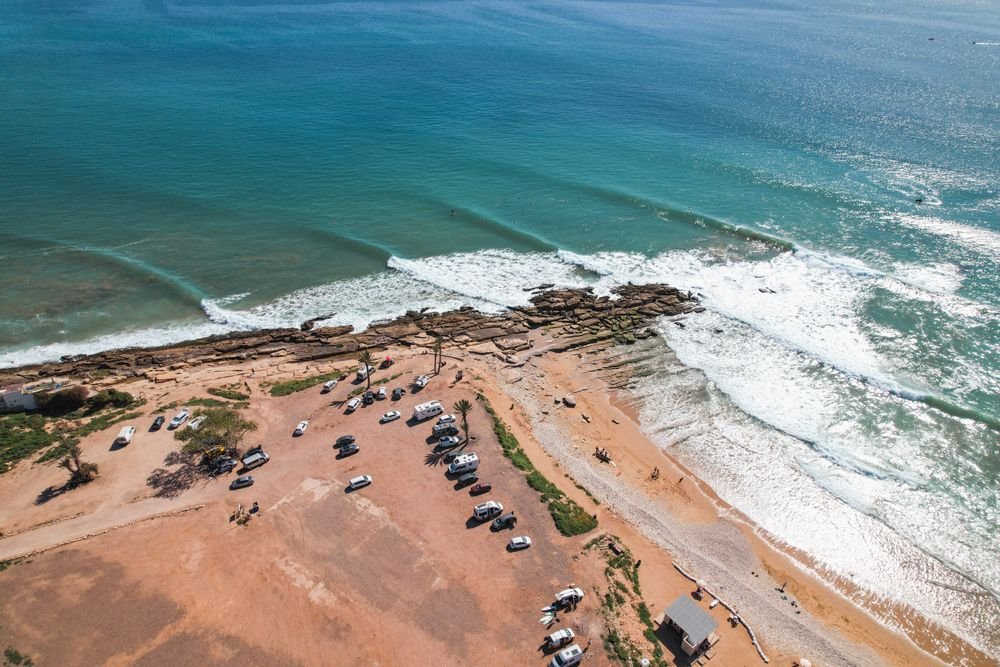
If you search for “Taghazout beach” you will find surf reports, but not much that tells a swimmer, sunbather or parent where to actually spend the day. The honest answer is that this stretch of Atlantic coast is built for surfing, not for paddling. There are lovely beaches here, but they differ a lot in swell exposure, facilities and safety. This guide goes through them from north to south so you can pick the right one for the day.
For official tourism information, see the Morocco National Tourist Office. If you only have a minute: Agadir city beach is the best for swimming, the Taghazout village beach is the most atmospheric, and the Tamraght and Aourir sands are the best compromise.
Quick Comparison
| Beach | Best for | Swimming | Facilities | Lifeguards |
|---|---|---|---|---|
| Taghazout village | Atmosphere, sunsets | Poor | Cafes above the sand | No |
| Taghazout Bay resorts | Resort days | Fair, calmer bays | Loungers, hotel bars | Resort staff |
| Tamraght / Imourane | Relaxed sand, watching surf | Fair on calm days | Cafes, surf schools | No |
| Devil’s Rock | Learner surfers | Fair, sandy bottom | Cafes, lessons | No |
| Anza | Fish lunch, quiet walks | Fair on calm days | Fish grills | No |
| Agadir city beach | Swimming, families | Good | Loungers, promenade, showers | Seasonal |
| Imsouane bay | Long-wave surfing, sunsets | Fair inside the bay | Cafes, surf schools | No |
Taghazout Village Beach
The sand in front of Taghazout is short and steep, with blue fishing boats pulled up above the tideline and white houses climbing the hill behind. It is a photogenic beach, and the rooftop cafes overlooking Hash Point are the best seats in the village for watching the surf at sunset.
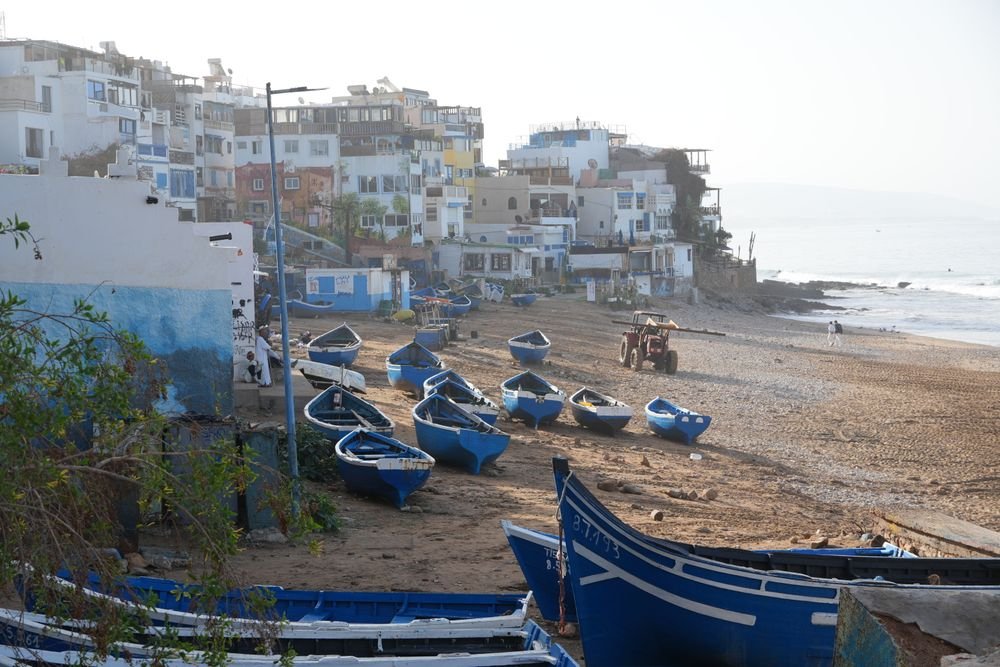 Blue fishing boats on the beach below the white houses of Taghazout.
Swim safety: this is the weakest swimming beach on the coast. Waves break close to shore, there are rocks at both ends, and currents run toward the point. Wade and sunbathe, but save serious swimming for elsewhere. Facilities: cafes and surf shops are a few steps up from the sand; there are no loungers, and public toilets are basic. Lifeguards: none that we have seen on a regular basis. Access: walk down from the main street in under five minutes. Best season: October to April for sunsets and swell watching, June to September for sitting on the sand. Our Taghazout village guide covers where to eat and stay in the village.
Taghazout Bay Resort Beaches
North of the village, a purpose-built resort development called Taghazout Bay has a series of coves with international-brand hotels. The beaches here are tidied daily and have loungers and hotel services, and some coves are more sheltered than the village beach. Swim safety: better than the village, but this is still the open Atlantic, so respect flags and staff advice. Access: most beach frontage is tied to a hotel, so day access depends on the property and can change. If you want a resort-style stay with the sea on your doorstep, compare Taghazout hotels on Booking.com. Otherwise, Agadir city beach gives you the same facilities for free.
Tamraght and Imourane Beach
Two kilometres south of the village, Tamraght has a long, wider beach backed by a coastal path and surf camps. The northern end near Imourane is a popular sunbathing spot, and the sand is much less crowded than in the village. Swim safety: fair on calm summer days and in smaller swell, poor in winter. Rips can form where sandbanks shift, so swim between the surfers’ flags if there are any, or not at all. Facilities: cafes and surf schools just up from the sand; no loungers. Access: a 15 to 25 minute walk south from Taghazout, or a few dirt-road parking spots on the coast road. Best season: May to October for swimming. Read our Tamraght guide for accommodation and food.
Devil’s Rock Beach
On the Tamraght seafront, Devil’s Rock is the sandy beach most surf schools use for first lessons because the seabed is soft and the waves are forgiving. For non-surfers it is a good place to watch lessons from the sand with a mint tea. Swim safety: shallow and sandy, so it is the best of the surf beaches for a paddle, but lesson groups occupy the water in the morning, so swimmers should keep clear. Lifeguards: none; surf instructors keep a close eye on their own groups only. Best season: spring and autumn for mild water and fewer wind gusts. Book a surf lesson here if you want to try it.
Anza Beach
Anza, at the northern edge of Agadir, is a fishing harbour with a rocky beach and a relaxed, local atmosphere. It is not a resort beach, but the combination of boats unloading in the morning and grilled fish at lunchtime, from about 20 to 40 MAD per kilogram for the catch as of 2026 plus a small cooking fee, makes it one of the best low-key beach stops. Swim safety: fair in the sheltered corners on calm days, but the beach break is exposed to Atlantic swell, and there are no formal swimming areas. Facilities: simple fish grills and cafes. Access: 10 to 15 minutes by grand taxi from Taghazout. Our Anza guide has the full detail.
Agadir City Beach
If your priority is swimming, this is the one. Agadir’s bay curves for roughly 9 to 10 km of wide, fine sand, sheltered from the strongest Atlantic swell by the headland, and backed by a palm-lined promenade with cafes, restaurants and hotels. It is the beach people mean when they search “Agadir beach Morocco”, and it is by far the most family friendly of the options here.
 Agadir’s city beach is wide, flat and well maintained.
Swim safety: much calmer than the surf coast, with gently shelving sand. Flags and seasonal lifeguard posts operate in the main summer season, but supervision varies by section, so still keep children within arm’s reach. Facilities: loungers and parasols for rent (typically 30 to 80 MAD per set, bargain on the price), showers, toilets, beach cafes, water-sports operators and the full promenade. Access: 20 km south of Taghazout, 30 to 40 minutes by shared grand taxi (20 to 30 MAD per person as of 2026). Best season: June to September for hot, calm water; April, May and October are comfortably warm. Winter is mild and sunny but the Atlantic is cold. For a night here, see our Agadir town guide and Agadir hotels, or join a guided day trip from Agadir.
Agadir also has beaches beyond the main bay, such as the stretch toward the port and the quieter sands past the marina. Local families use them heavily at weekends and in summer, so expect crowds on Fridays and public holidays.
Imsouane Bay
Imsouane is about 1.5 hours north of Taghazout, so it is a day trip or an overnight rather than a beach hop. The main bay is a protected, long, curved cove with a gentle wave that makes it one of the most beginner-friendly surf spots in Morocco. Swim safety: inside the bay, it is calmer than on open coast beaches, but the headland, boats and surfers share the same water. Facilities: cafes and surf schools on the cliff, and sunset grills. Best season: September to April for the wave, June to September for easier swimming. See our Imsouane guide for the full picture, or find Imsouane stays.
Practical Beach Tips
- Check conditions first. The Atlantic can be rough on sunny days. Ask your guesthouse, or look at our Taghazout surf forecast guide.
- Dress for Morocco. Swimwear is normal on the beach, but cover up in the villages. See what to wear in Taghazout.
- Sun and wind. Afternoon wind on this coast is regular and the UV index is high even in winter. Bring reef-safe sunscreen.
- No alcohol. Taghazout beaches are alcohol free in practice. Agadir hotels are the exception.
- Travelling with children? Our family travel guide goes deeper on the safest options.
- Flying in? Most visitors land at Agadir Al Massira. See our airport to Taghazout guide for the transfer.
Which Beach Should You Choose?
- Swimming and young children: Agadir city beach.
- Learning to surf: Devil’s Rock and Tamraght.
- Atmosphere and sunsets: Taghazout village.
- Resort day with minimal effort: Taghazout Bay hotels, or Agadir.
- Local colour and fresh fish: Anza.
- Wave-watching day trip: Imsouane.
Last updated October 2026. Prices are approximate and change with season.