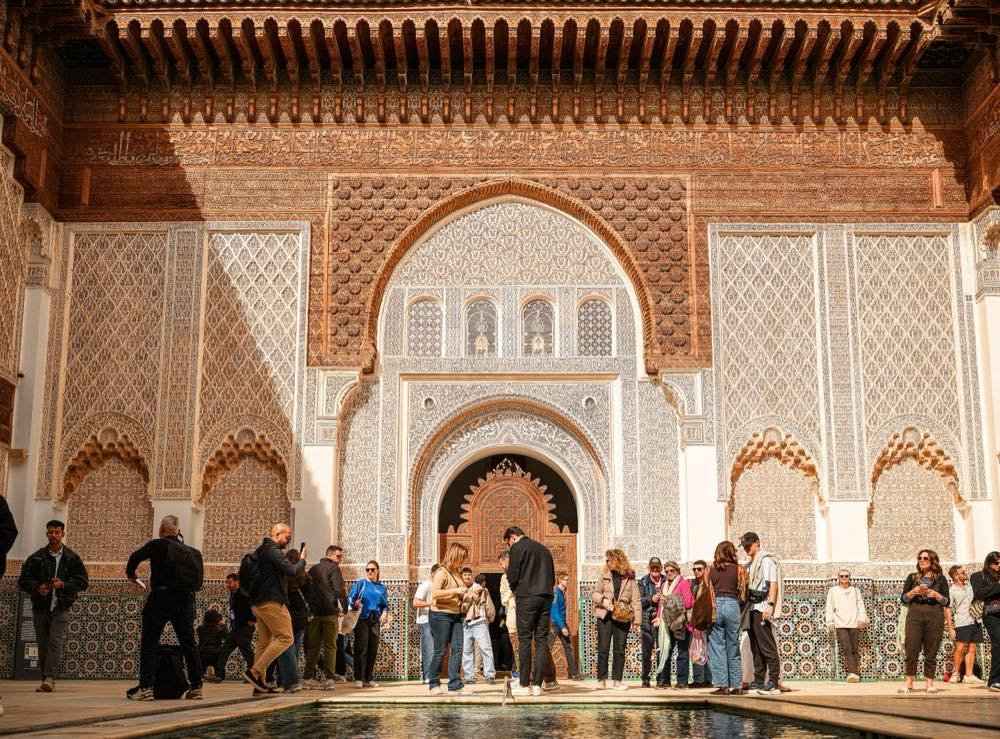
Morocco reached a new benchmark in 2024, recording 17.4 million international tourist arrivals according to the Office National Marocain du Tourisme (ONMT). That figure represents a 20 percent increase on the 14.5 million arrivals posted in 2023, which was itself a national record at the time. For travellers weighing up Taghazout and the Agadir coast, these numbers tell the story of a destination in sustained, well-documented growth.
Official national figures come from the High Commission for Planning, and visitor information is on the Morocco National Tourist Office site.
Annual Visitor Numbers
Morocco’s post-pandemic recovery has been sharper than the global average. The country recorded 12.9 million arrivals in 2019 (ONMT), then saw numbers collapse to 3.1 million in 2020. Recovery was steady: 5.8 million in 2021, 11.1 million in 2022, 14.5 million in 2023, and the record 17.4 million in 2024.
The 2024 figure already puts Morocco well ahead of its pre-pandemic baseline and on a trajectory that makes its 2030 target credible. The UN World Tourism Organization (UNWTO) ranked Morocco among the top 20 global destinations by arrivals for 2024.
Top Source Markets
France is the dominant source market, accounting for approximately 4.5 million arrivals in 2024 - roughly 26 percent of total inbound tourism. The Moroccan diaspora in France accounts for a significant portion of that figure, supplemented by pure-leisure travellers drawn to the Atlantic coast and the Atlas Mountains.
Spain contributed approximately 1.8 million arrivals in 2024, with strong overlap between the Canary Islands market and the Agadir coast. The UK sent approximately 1.3 million visitors. Algeria, despite restrictions on land crossings at various points, accounted for over one million arrivals. Germany contributed approximately 800,000 arrivals, Italy approximately 600,000, and the United States approximately 450,000.
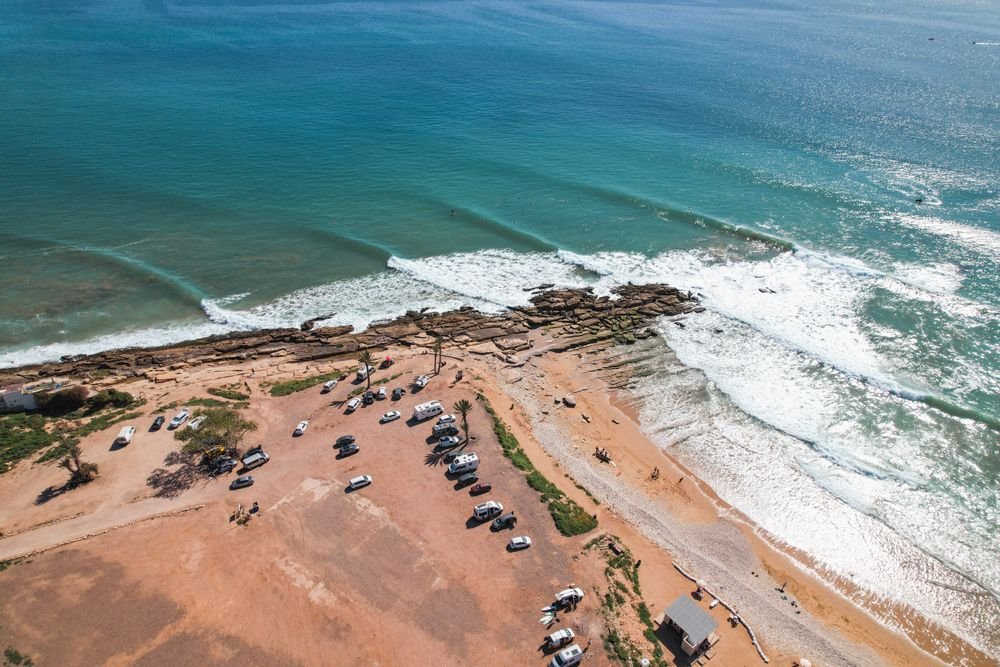 Waves breaking along a long beach, seen from above with a car park behind the sand.
The Netherlands and Scandinavia are smaller but fast-growing markets, particularly for surf tourism concentrated around Taghazout, Tamraght, and Imsouane.
Agadir and the Souss-Massa Region
Agadir is Morocco’s leading beach resort and the primary gateway for Taghazout visitors. The Souss-Massa region receives approximately 3.5 million tourists annually, with the bulk flying directly into Al Massira Airport (Agadir). That airport handled 2.8 million passengers in 2023 and approximately 3.4 million in 2024 following the opening of new international routes.
The Taghazout Bay integrated tourism zone, a government-backed development project 12 km north of Agadir, is designed to add substantial accommodation and amenity capacity to the region. Phase one infrastructure was substantially complete by 2024, with hotel openings continuing into 2025 and 2026.
Peak Season and Arrival Patterns
Morocco’s tourism is less seasonal than purely Mediterranean competitors. Nationally, the peak months by arrivals are July, August, and December, driven by the French, Spanish, and Moroccan diaspora markets. The August peak is particularly strong: Agadir and Taghazout see sustained domestic and European beach demand in summer, even as surf conditions are typically flat.
For surf-focused visitors, the peak season runs October through April, when Atlantic swells are most consistent. December, January, and February deliver the largest swells (overhead to double-overhead), while March and April offer quality waves with warmer air temperatures. Occupancy rates at Taghazout surf camps typically run 80 to 90 percent from November through March.
Spring (March to May) and autumn (September to October) represent the sweet spot for mixed-activity visitors combining surf, hiking, and coastal exploration. Shoulder season rates are lower and crowds are thinner than the July-August peak.
Economic Contribution
Tourism directly contributed approximately 7 percent of Morocco’s GDP in 2024, rising to an estimated 12 percent when indirect and induced effects are included (ONMT and World Travel and Tourism Council estimates). Foreign exchange receipts from tourism reached approximately 110 billion Moroccan dirhams (approximately 10.5 billion USD) in 2024, making it one of Morocco’s top three sources of foreign currency alongside remittances and phosphate exports.
The sector employs approximately 700,000 people directly in Morocco, with the Agadir region accounting for a disproportionate share given the concentration of large resort hotels and tour operators.
Accommodation Infrastructure
Morocco had approximately 3,500 classified hotels as of 2024 (Ministry of Tourism), with a total classified bed capacity of approximately 270,000. Agadir alone accounts for roughly 50 classified hotels with more than 35,000 beds, making it one of the highest-density resort areas in North Africa.
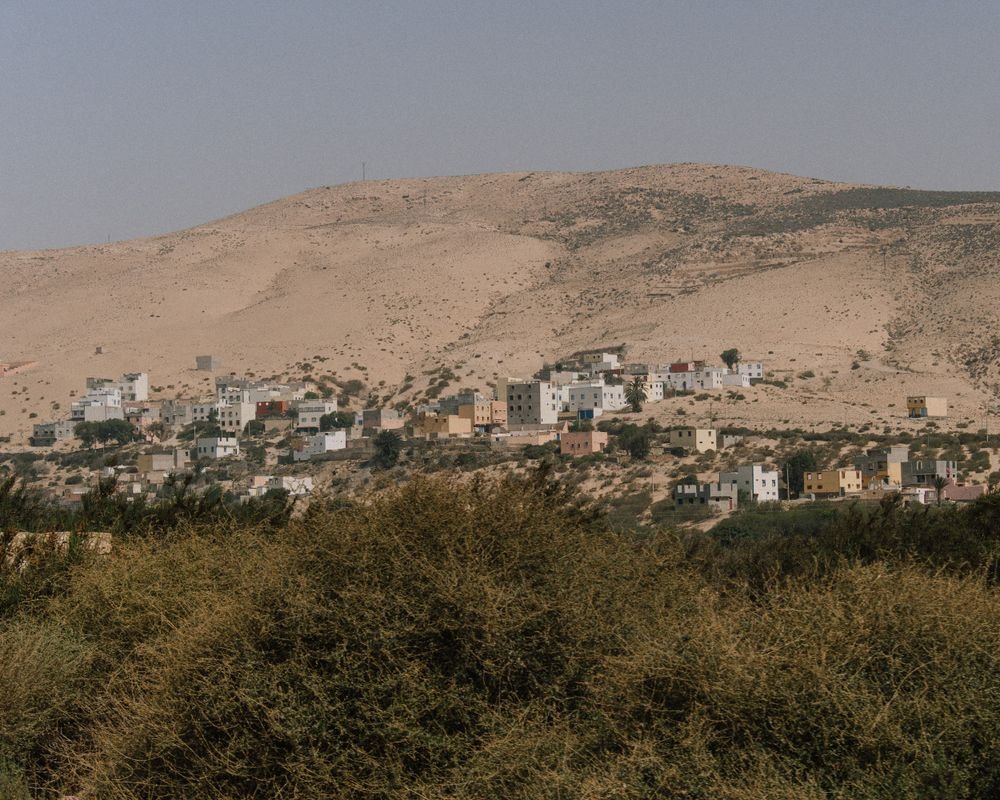 Houses of Taghazout on a dry hillside above the coast.
Average national hotel occupancy ran at approximately 58 percent in 2024. Agadir and Marrakech consistently exceed the national average, running 65 to 70 percent occupancy in peak months. Riad and non-classified accommodation - significant in medinas and surf villages - are not captured in official hotel counts; estimates suggest the actual bed supply is 30 to 40 percent higher.
Growth Trends and 2030 Outlook
Morocco’s Vision 2030 tourism strategy targets 26 million international arrivals by 2030. Given 2024 performance, the target is achievable without requiring further acceleration - a compound annual growth rate of approximately 7 percent would reach it comfortably.
The 2030 FIFA World Cup, co-hosted by Morocco, Spain, and Portugal, is the most significant near-term demand catalyst. Agadir is one of six Moroccan host cities. The tournament is expected to generate a concentrated surge in arrivals across June and July 2030, with investment in Agadir’s stadium, transport links, and hotel capacity already underway.
Infrastructure investment is broad: Marrakech Menara Airport is being expanded to 14 million annual passengers, Casablanca Mohammed V to 20 million, and Agadir Al Massira to 5 million. New direct routes from North America and the Gulf were added in 2024 and 2025, diversifying Morocco’s source market base beyond its traditional European core.
For Taghazout, the trend lines are consistent: more arrivals nationally, a growing surf tourism segment, and a gateway airport that is expanding to match demand.
Sources: Office National Marocain du Tourisme (ONMT), UNWTO, Ministry of Tourism Morocco, World Travel and Tourism Council. Data for 2024 unless otherwise stated.
Related news: Morocco’s Hotel Pipeline Hits Record Highs for 2026 · Morocco Draws Record Visitors as Middle East Unrest Grows · Morocco Tourism Investment Shifts to Atlantic Coast · IFC Orders Morocco Tourism Roadmap: Atlantic Coast Focus · Morocco Signs Mediterranean Tourism Plan for Summer 2026 · Morocco Tourism Record Revenues 2026: Impact on Taghazout · Morocco Climbs to 22nd in Global Tourism Rankings in 2025 · Morocco Breaks Tourism Records as Taghazout Visits Surge