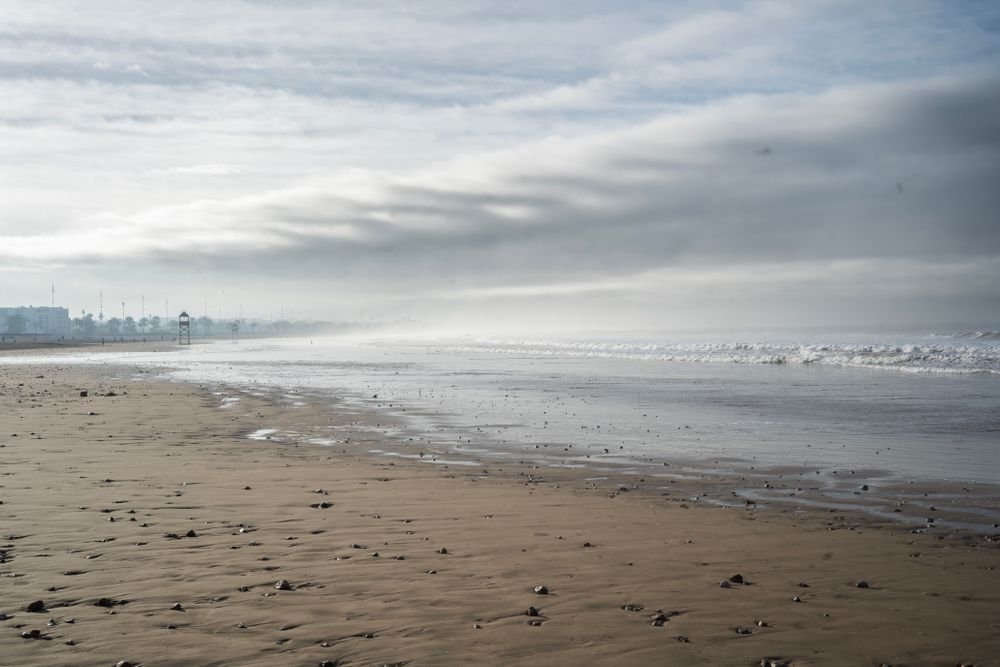
If you are searching for Taghazout weather, the short answer is: dry, mild and sunny nearly all year, with 20-27°C daytime highs, a sea that never drops below about 17°C, and fewer than 40 rainy days across the whole year. What changes by season is the swell, the wind and the wetsuit you need, not whether you can sit outside.
Where this data comes from
Taghazout has no weather station of its own. The figures below are long-term climate averages for Agadir (about 20 km south, same coastline, same Atlantic influence), cross-checked against published climate tables such as Agadir’s climate summary. Treat them as approximate: sources differ by 1-2°C, and the coast at Taghazout is usually a degree or two cooler by day and breezier than Agadir’s airport reading, because of the Atlantic wind. Sea temperatures are typical surface values near the surf breaks. Swell consistency is our own rating, drawn from our swell seasons guide.
Taghazout weather by month
| Month | Air high | Air low | Sea temp | Rain days | Wetsuit | Swell consistency |
|---|---|---|---|---|---|---|
| January | 20°C | 9°C | 17°C | 4 | 3/2mm (4/3mm if you feel the cold) | Excellent |
| February | 21°C | 10°C | 17°C | 4 | 3/2mm | Excellent |
| March | 22°C | 12°C | 18°C | 3-4 | 3/2mm | Good |
| April | 23°C | 13°C | 18°C | 3 | 3/2mm or 2mm shorty | Moderate |
| May | 24°C | 15°C | 19°C | 1 | 2mm shorty | Moderate |
| June | 25°C | 17°C | 20°C | 0 | 2mm shorty or rash vest | Low |
| July | 27°C | 19°C | 21°C | 0 | None or rash vest | Low |
| August | 27°C | 19°C | 21°C | 0 | None or rash vest | Low |
| September | 27°C | 18°C | 21°C | 1 | Rash vest or 2mm shorty | Moderate, building |
| October | 25°C | 16°C | 20°C | 2-3 | 2mm or 3/2mm | Good |
| November | 23°C | 13°C | 19°C | 3-4 | 3/2mm | Excellent |
| December | 21°C | 10°C | 18°C | 4 | 3/2mm | Excellent |
Approximate multi-year averages for Agadir as of 2026. Rain days means days with at least 1mm of rain. Annual rainfall is only around 250mm, mostly in winter.
Winter (December to February): mild days, cool nights, best swell
Expect clear, sunny days of 20-21°C and evenings that drop to 9-10°C, so bring a fleece or light jacket for dinner on a rooftop. Rain falls on roughly four days a month and is normally a short shower between long dry spells. The sea sits at 17-18°C, which means a 3/2mm wetsuit as a minimum. This is also the heart of the surf season, with the most consistent Atlantic swell of the year.
Month by month: January, February and December. Our Christmas in Taghazout guide covers the holiday week.
Spring (March to May): warming up, swell easing
Highs climb from 22°C to 24°C and nights stop feeling cold by May. Rain is nearly gone by May. The water is still only 18-19°C, so many surfers keep a 3/2mm in March and April before switching to a shorty. Morning fog and onshore wind are common on the coast; they usually burn off by late morning. Swell is still decent in March and fades through May, which suits beginners well, and a surf lesson in Taghazout is easiest to book at this time of year.
Month by month: March, April and May.
Summer (June to September): warm, dry, mostly flat
Highs of 25-27°C with almost no rain and sea temperatures of 20-21°C make this the easiest season for swimming and beach time. The coast has a steady afternoon breeze that keeps it far cooler than Marrakech or the inland Souss valley. Swell is small, so surfing is limited to beginner-friendly waves. Be aware of the Chergui, a hot easterly wind that occasionally pushes temperatures well above 35°C for a day or two, and of strong UV all summer.
Month by month: June, July, August and September.
Autumn (October to November): the sweet spot
October still has summer warmth (25°C highs, 20°C sea) while the first reliable swells return and the summer crowds leave. By November the water cools to 19°C and swell becomes consistent, with the first real rain of the season arriving on three or four days. Many surfers consider these two months the best balance of weather and waves.
Month by month: October and November.
What to pack for Taghazout’s climate
- All year: sunscreen (UV is high even in winter), sunglasses, a hat and a refillable water bottle.
- November to March: a fleece or light jacket for evenings, a 3/2mm wetsuit, and a light rain layer.
- April to October: light cotton or linen, a rash vest, and a 2mm shorty for the shoulder months.
- Anytime you head inland: add a layer for the Atlas foothills, where winter nights get much colder than the coast.
Weather or season: which page do you need?
This page answers “what will the weather be?”. If you are deciding when to book around crowds, prices and surf conditions, read our best time to visit Taghazout guide. If you want a full picture of one month, use the monthly links above. Once your dates are set, compare places to stay in Taghazout and plan activities with Taghazout tours.